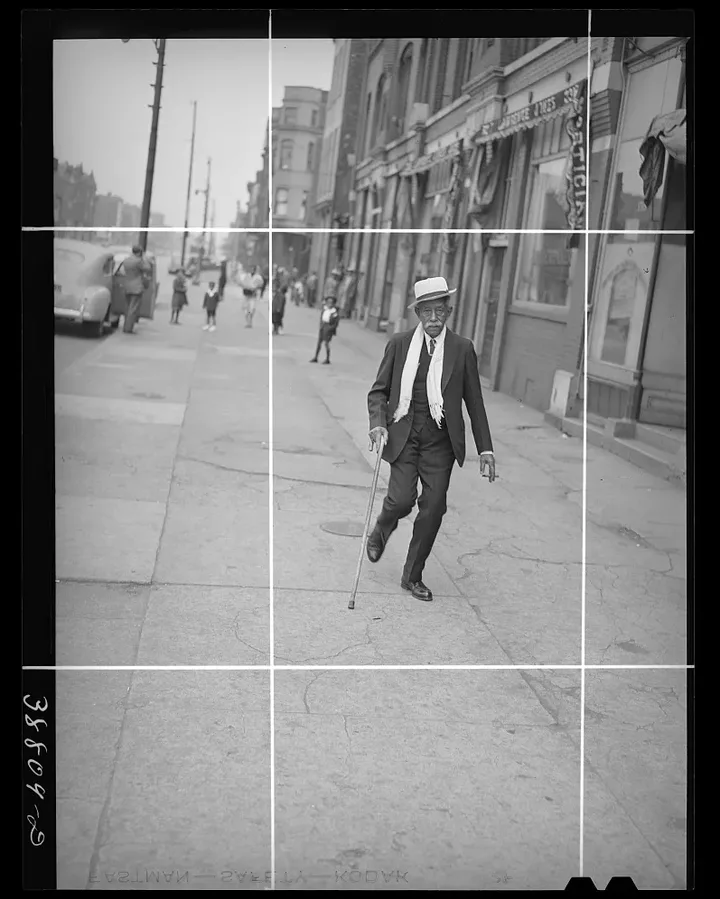
Pie Town, New Mexico (1940 photographs) (1940 (black-and-white in June; color at the fall fair))
In 1940 Russell Lee photographed Pie Town, a homesteading settlement in Catron County, New Mexico, for the Farm Security Administration. His pictures of families such as Faro and Doris Caudill, living in a dugout and farming dry land, became the best-known body of work he made. This page is about the series as a whole; the lead image here is Lee's view of the Caudills' dugout home.
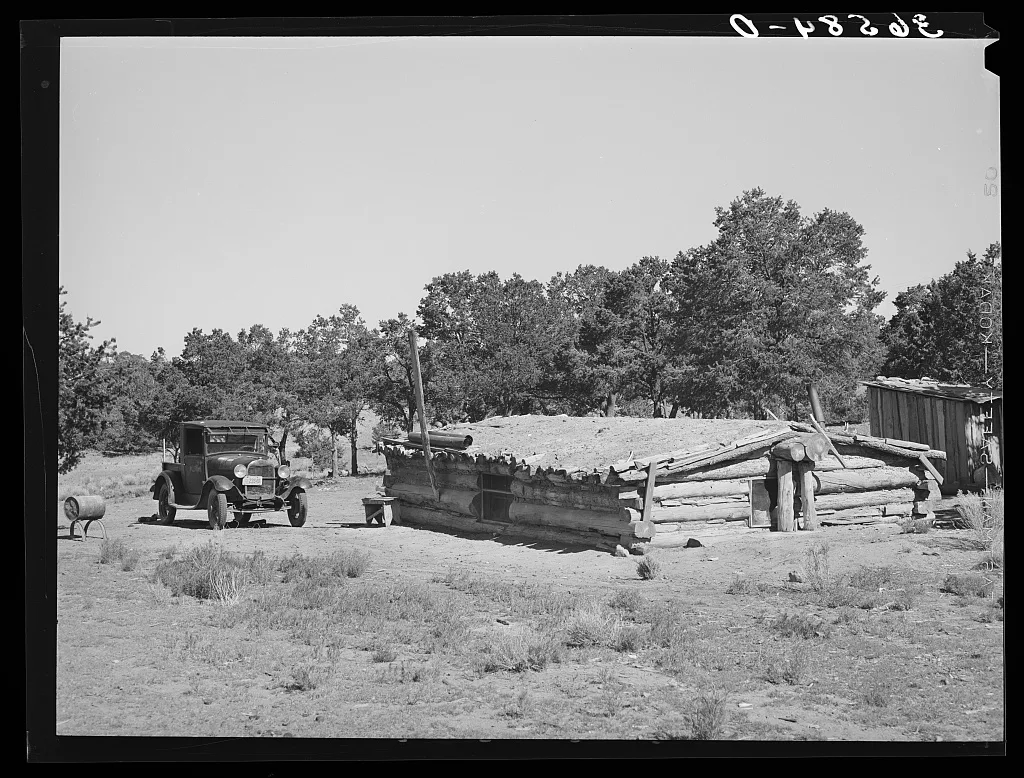
Image: Library of Congress, Prints & Photographs Division, FSA/OWI Collection.
- Photographer
- Russell Lee (1903–1986), Farm Security Administration
- Dates
- Black-and-white negatives dated June 1940; Kodachrome color slides dated October 1940
- Place
- Pie Town, Catron County, New Mexico, on U.S. Highway 60 just west of the Continental Divide
- Lead image
- Dugout home of Faro and Doris Caudill, safety negative, LC-USF34-036584-D
- Size of the series
- More than 600 Pie Town photographs at the Library of Congress, according to Joan Myers
- Collection
- Library of Congress, Farm Security Administration/Office of War Information collection (public domain)
- Also known as
- Russell Lee Pie Town; Pie Town New Mexico 1940 photographs; Faro and Doris Caudill, Pie Town; Pie Town homesteaders, FSA
How the series was made
Russell Lee joined the Farm Security Administration's photography project in the fall of 1936 and became, in the words of the Texas State Historical Association, the agency's most prolific photographer. The FSA used his pictures to explain its work to the public, and by 1940 he was working mostly in the Southwest. That year he was sent to document homesteading in New Mexico, and he settled on Pie Town, a farming community on U.S. Highway 60 in Catron County, about two miles west of where the highway crosses the Continental Divide.
Lee did not pass through quickly. The Library of Congress dates his black-and-white negatives from Pie Town to June 1940, and his color slides of the community fair to October 1940, so his work there stretched from early summer into the fall. His wife, Jean Lee, a journalist he had married in 1939, travelled with him and wrote captions for his pictures. Those long captions, which record who people were, where they came from and what they ate for dinner, are a large part of why the series reads like a report on a whole town rather than a set of portraits.
Who and what the photographs show
The FSA caption cards describe Pie Town as a community settled by about 200 migrant farmers from Texas and Oklahoma who had filed homestead claims. Lee photographed them building, planting and gathering. Jack Whinery appears fencing his land with hand-split rails and leading a Sunday school discussion; one caption records that he arrived in Pie Town with thirty cents, which he spent on nails for his dugout. George and Mrs. Hutton, from Maud, Oklahoma, appear at their sawmill, tractor and storage cellar. Mrs. Bill Stagg sets a dinner table and shows a quilt made from tobacco sacks that she ripped up and dyed.
The family Lee photographed most closely was Faro and Doris Caudill and their daughter Josie. According to the photographer Joan Myers, more than a hundred of Lee's pictures show the Caudills: Doris setting out cabbage plants, the couple milking their cows, Josie asleep at a neighborhood card party, and the dugout they lived in. Lee also covered community life, including Sunday school in the Farm Bureau building, the literary society's evening programs, an ice cream party, the post office and the stage that brought the mail.
Why the series became famous
Pie Town offered the FSA something unusual: not a picture of people defeated by the Depression, but of families who had left the Dust Bowl and were building a cooperative community almost from nothing. The New Mexico Museum of Art calls Pie Town Lee's defining work as a documentary photographer, and the series is consistently listed among his best-known work.
Two things have kept it in view. The first is color. Most FSA photographs are black-and-white, but Lee shot part of the Pie Town series on Kodachrome slide film, and color frames such as the Caudill family eating dinner in their dugout and the crowd saying grace before the barbecue at the Pie Town Fair show the town in a way few Depression-era pictures do. A limited edition of dye transfer prints made from the Library of Congress transparencies is held by museums including the Nelson-Atkins Museum of Art. The second is the afterlife of the people in it. Joan Myers found Doris Caudill living in Oregon decades later and told her story in Pie Town Woman (University of New Mexico Press), and Smithsonian magazine, High Country News and other outlets have returned to the town to compare it with Lee's record.
What to look for
In the lead image, the Caudills' dugout sits low in the ground, a reminder that many homesteaders started by digging into the hillside because lumber and cash were scarce. Across the series, watch for improvisation: a fence of dead trees and brush, a shed built from slabs and parts of an old automobile, a tractor adapted from a truck, a harrow made at home. These details were deliberate. Lee was known for photographing interiors with direct flash, and his Pie Town pictures of kitchens, bedrooms and storage cellars record what people owned and how they arranged it.
Read the captions too. Jean and Russell Lee often quoted their subjects. Mrs. Hutton is recorded saying that a farm is the place for old folks, and her husband that there is nothing he would rather see less than a cotton field, a remark that hints at the kind of farming some of these families had left behind.
Which photographs this archive holds
This archive holds 88 of Lee's black-and-white Pie Town photographs, all digitized from the FSA safety negatives at the Library of Congress and dated June 1940. The lead image is Dugout home of Faro and Doris Caudill (negative LC-USF34-036584-D). The related images gathered on this page include Mr. and Mrs. Caudill milking, Mrs. Faro Caudill setting out cabbage plants, Josie Caudill asleep at a Forty-two party, Jack Whinery fencing and teaching Sunday school, the Hutton and Stagg households, the literary society, the ice cream party and the post office.
The Kodachrome color pictures from the October fair, including the Caudill family at dinner and Saying grace before the barbecue dinner, are a separate group in the Library of Congress's FSA/OWI color collection and are not part of this archive. A few frames here carry the catalog title Untitled photo, possibly related to, which is the Library's way of marking negatives without their own caption card.
Other versions in the archive
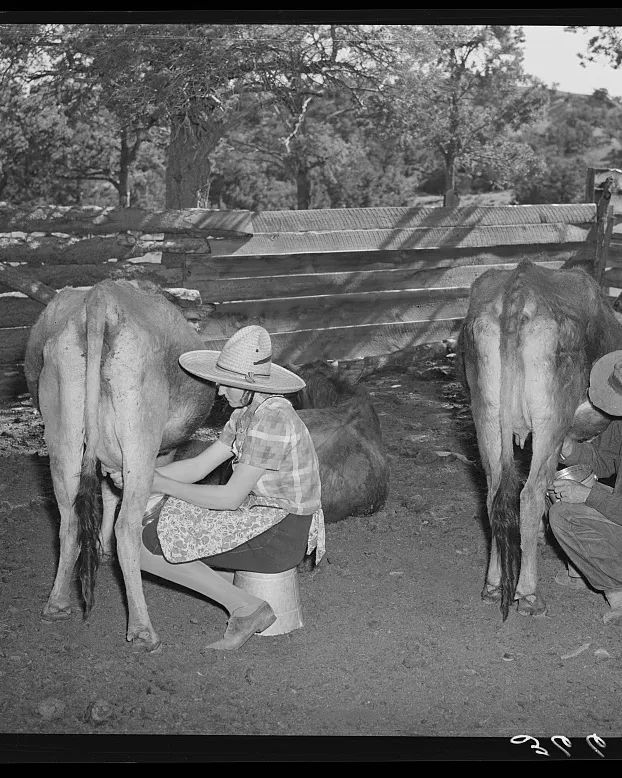
Mr. and Mrs. Caudill milking. They have six cows, two…
1940
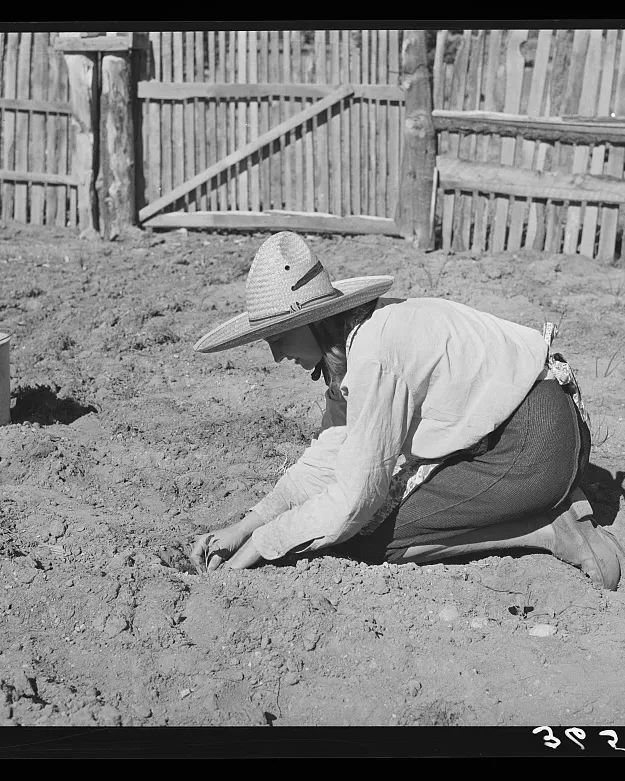
Mrs. Faro Caudill settling out cabbage plants in her…
1940
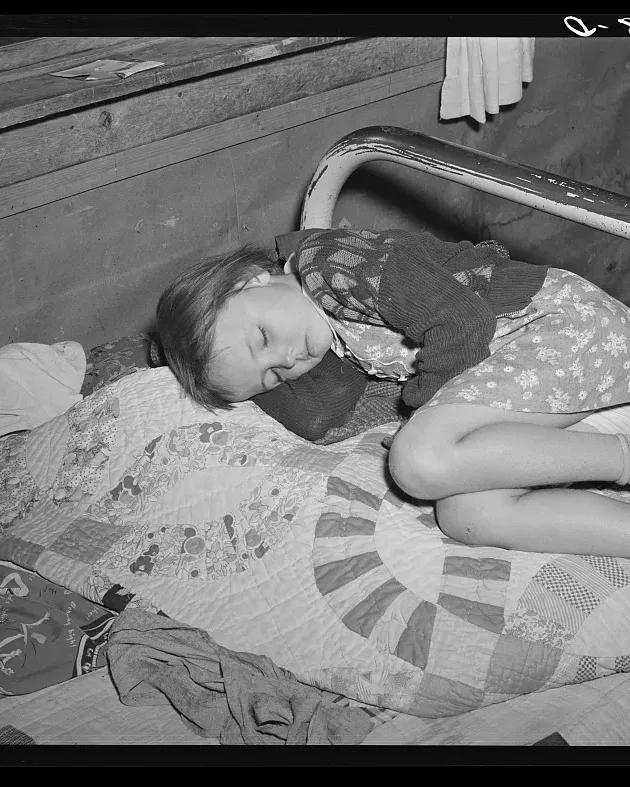
Josie Caudill asleep at Forty-two party. Pie Town, New…
1940
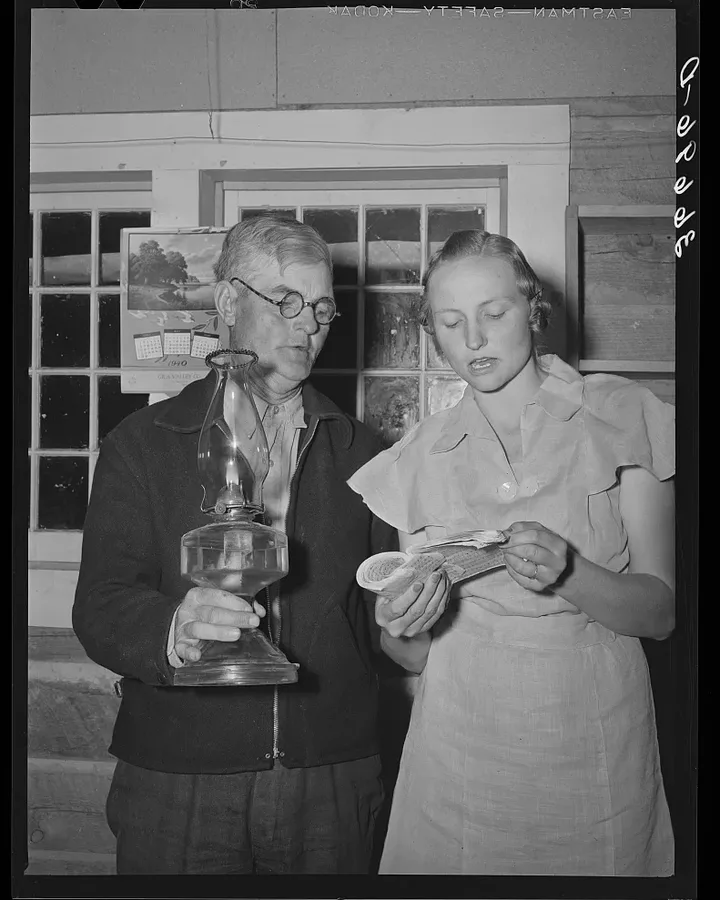
Mr. Besson, president of the literary society holds the…
1940
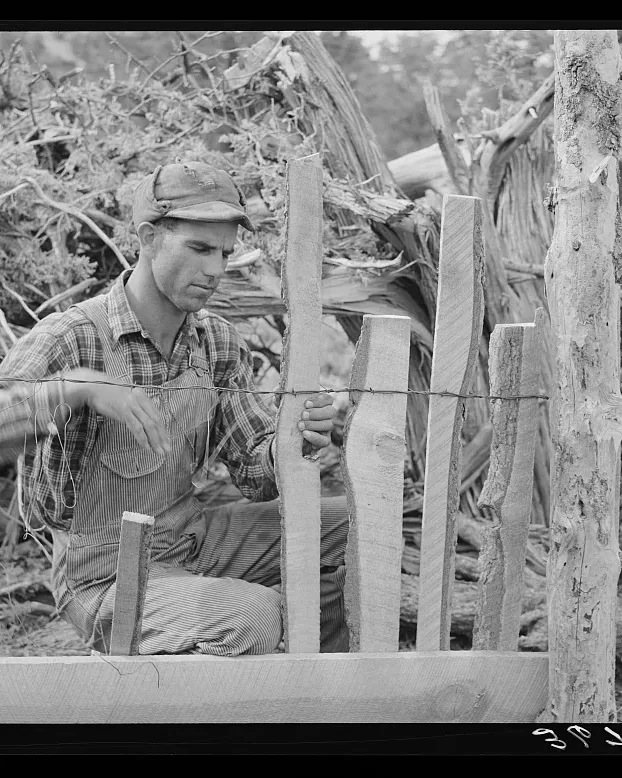
Jack Whinery fencing with handsplit rails on his homestead…
1940
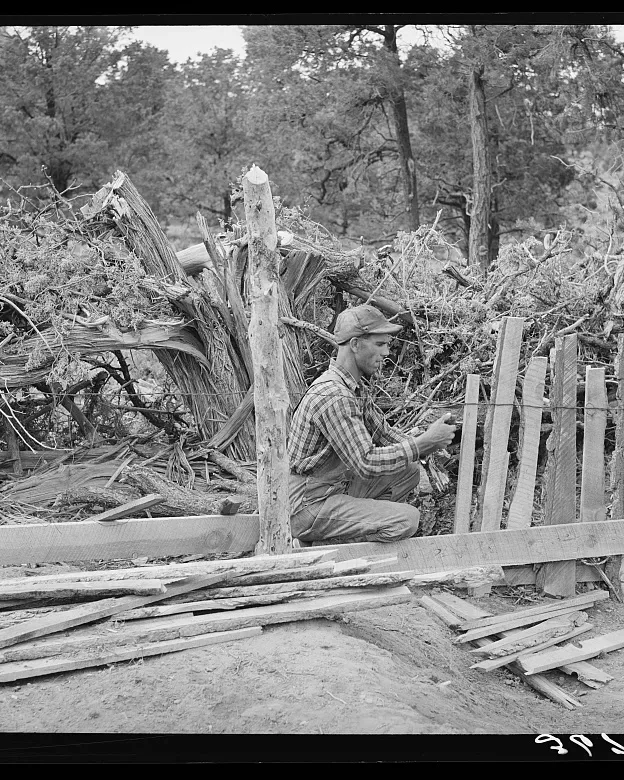
Jack Whinery fencing. Pie Town, New Mexico
1940
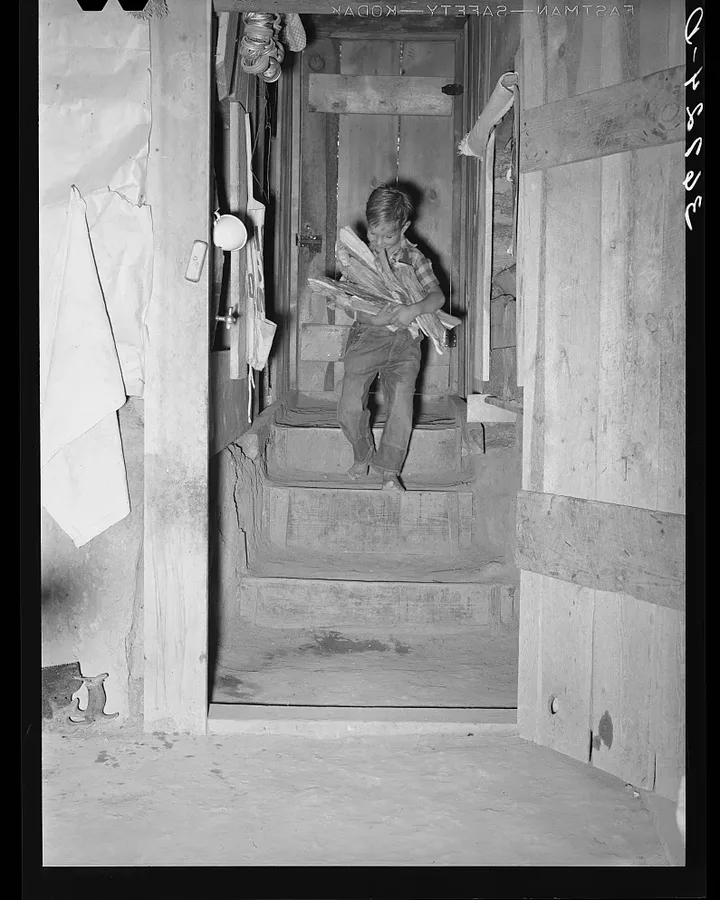
Jack Whinery's young son coming down the steps into the…
1940
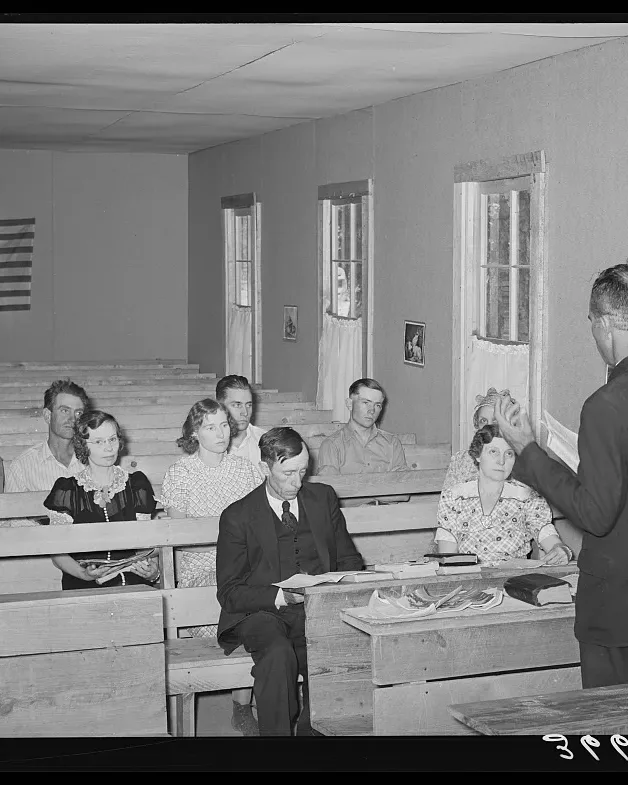
Mr. Whinery, homesteader and licensed preacher, reading the…
1940
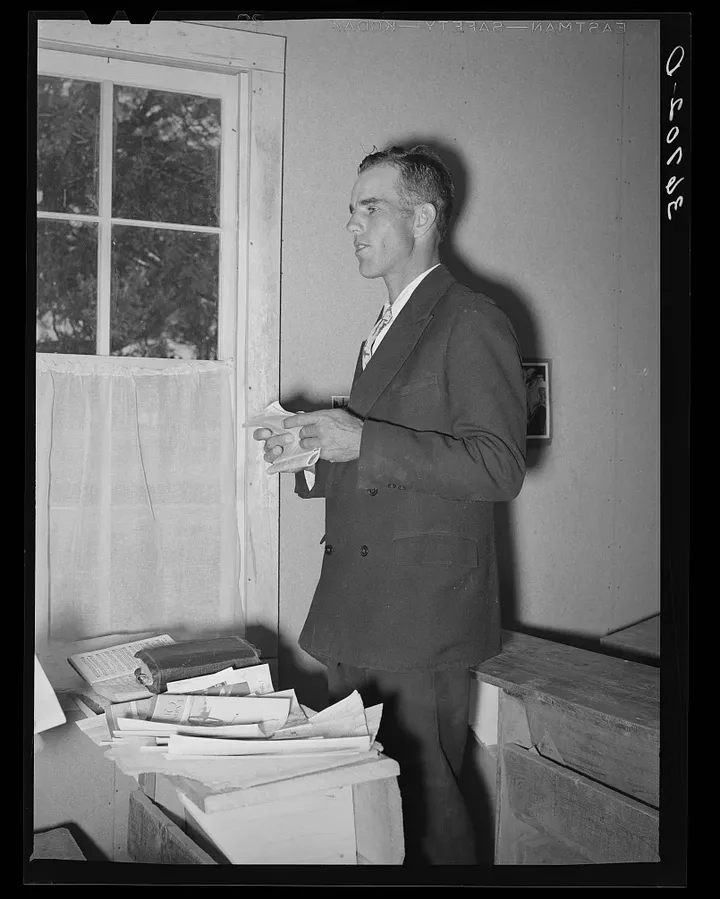
Jack Whinery leading the Sunday school discussion. Pie…
1940
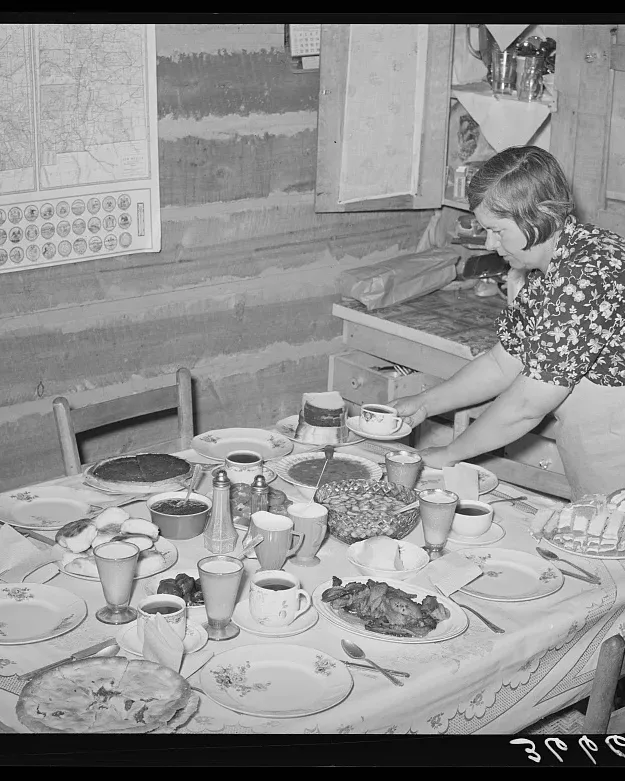
Mrs. Bill Stagg, homesteader's wife, putting the coffee on…
1940
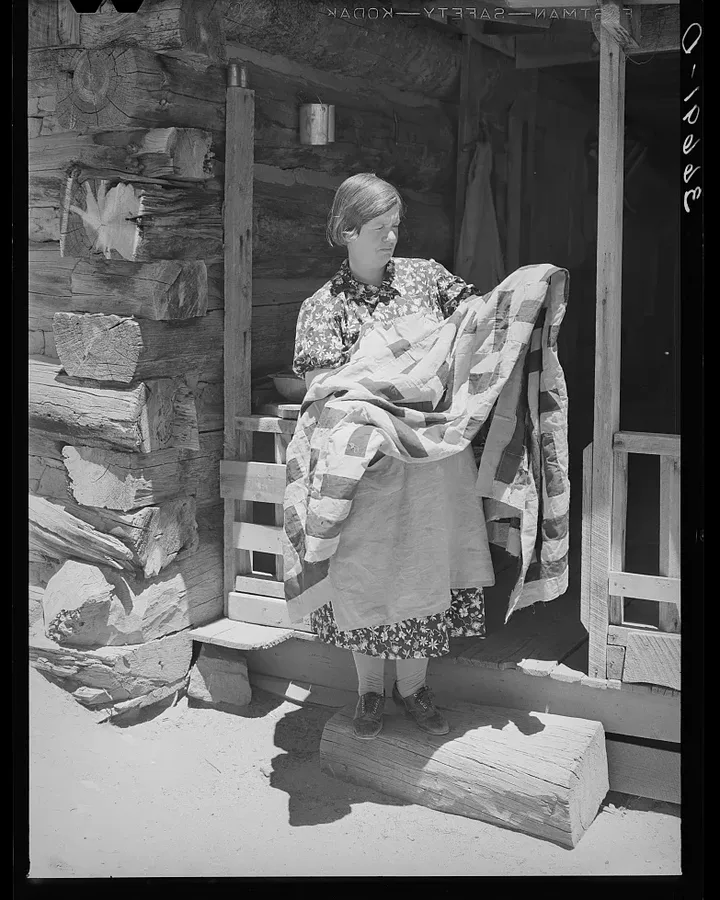
Mrs. Bill Stagg exhibiting a quilt made from tobacco sacks…
1940
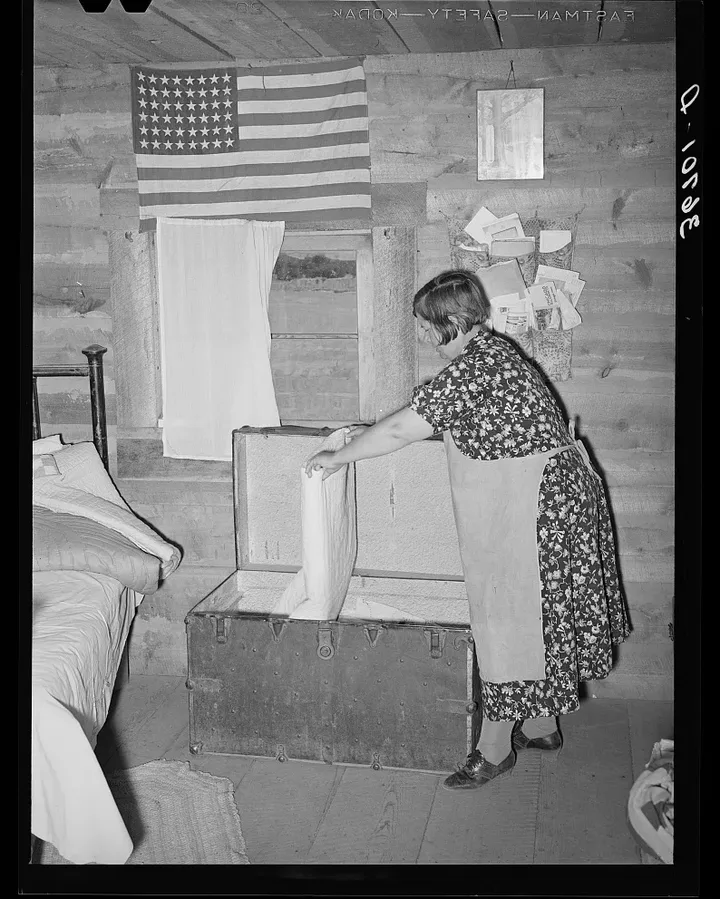
In the farm home of Bill Staggs. Pie Town, New Mexico
1940
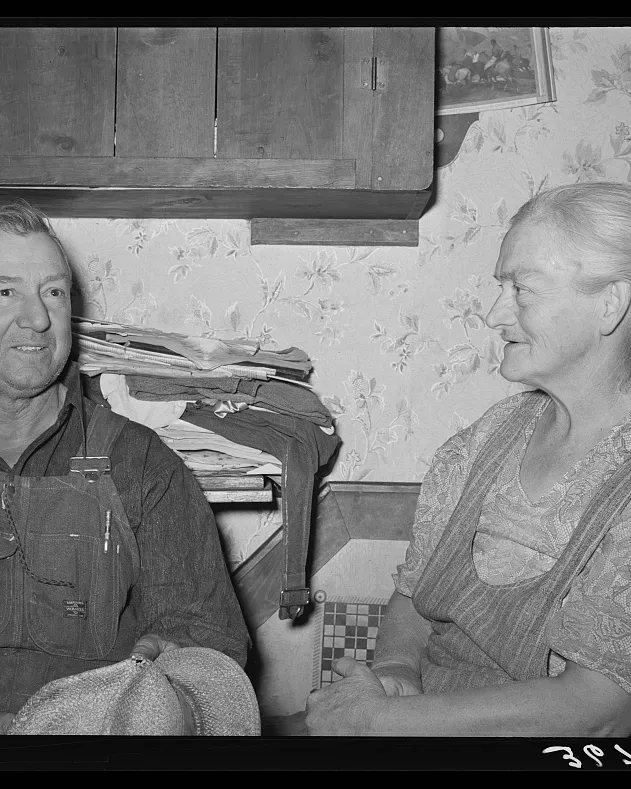
Mr. and Mrs. George Hutton, Sr., homesteaders from…
1940
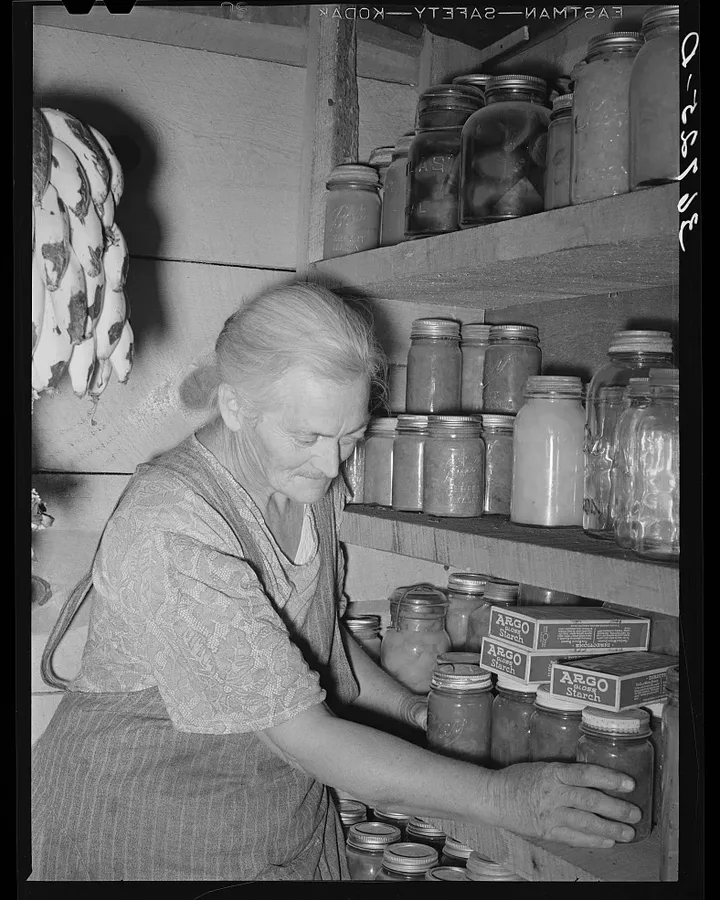
Mrs. Hutton in her storage cellar. Mrs. Hutton said, "You…
1940
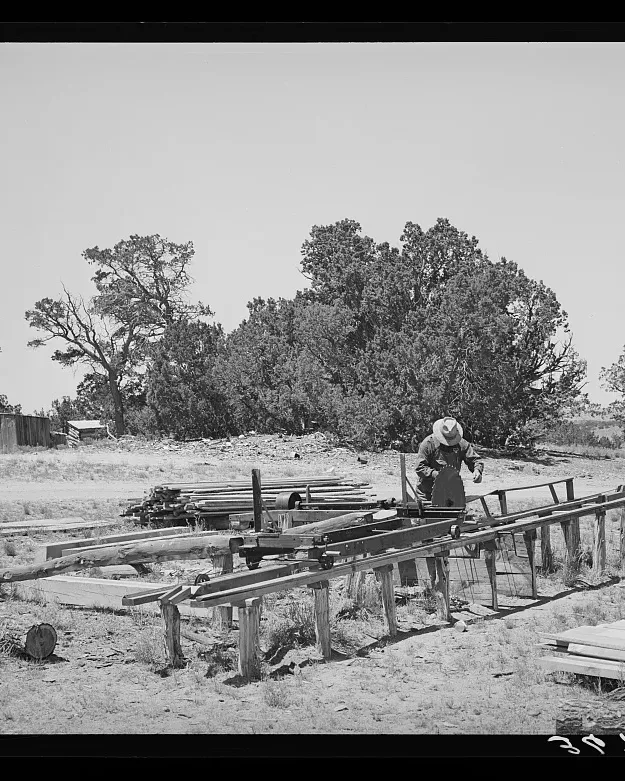
George Hutton working at the small sawmill which he built…
1940
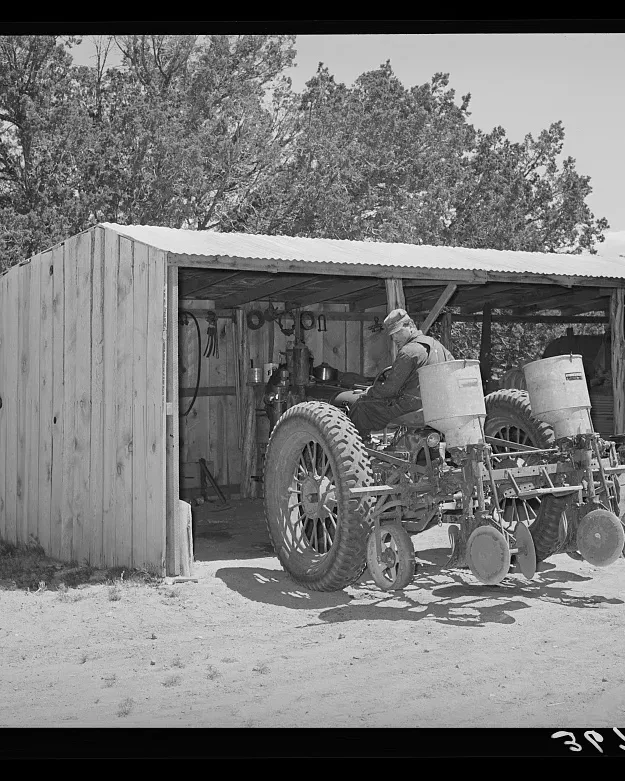
George Hutton with his tractor. He is one of the few…
1940
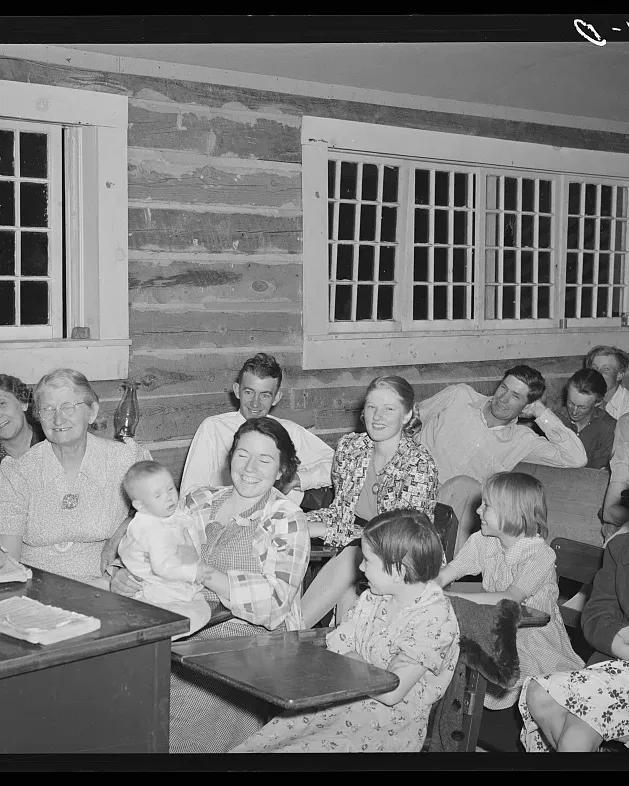
Farmers and their families enjoying the literary society…
1940
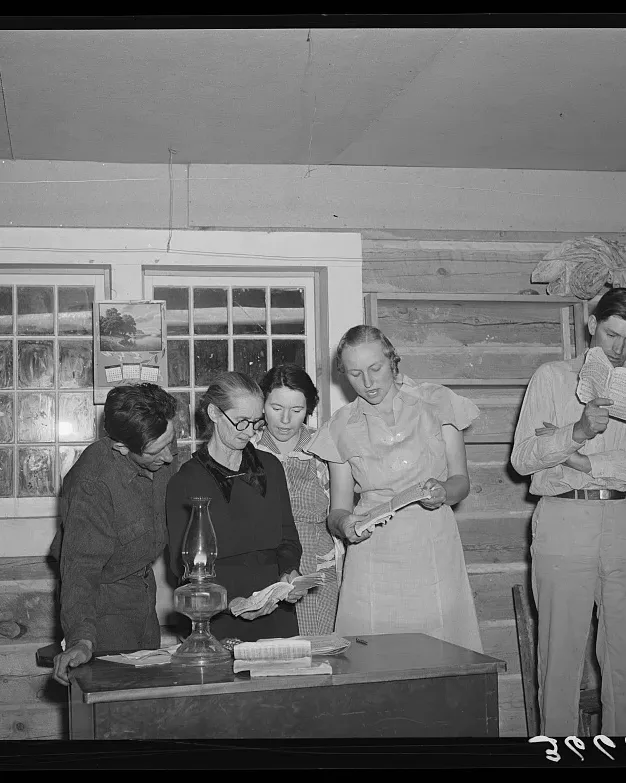
Farmers and wives singing at the literary society. Pie…
1940
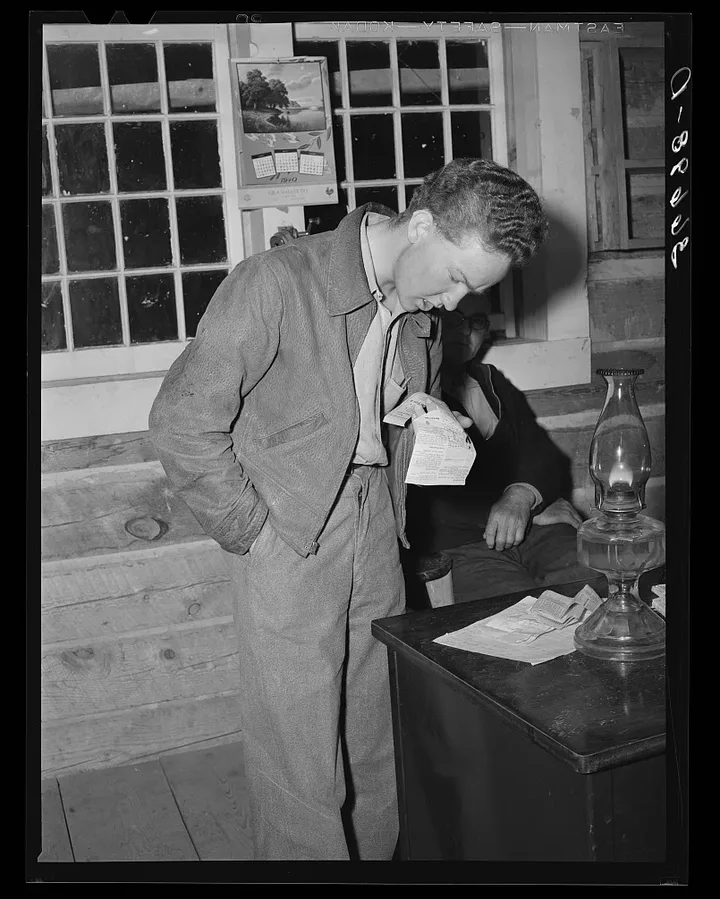
Farm boy reading jokes as his part of the program at the…
1940
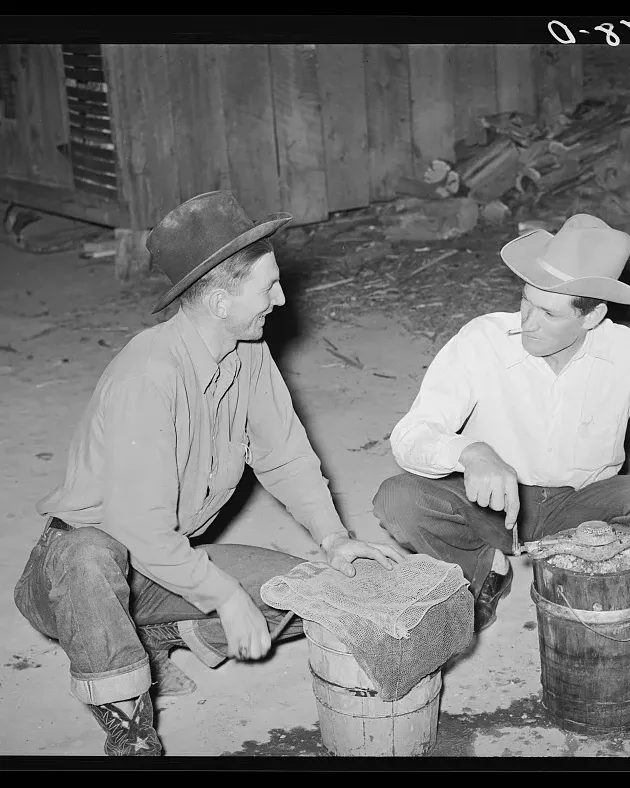
Farmers freezing ice cream. Pie Town, New Mexico. There is…
1940
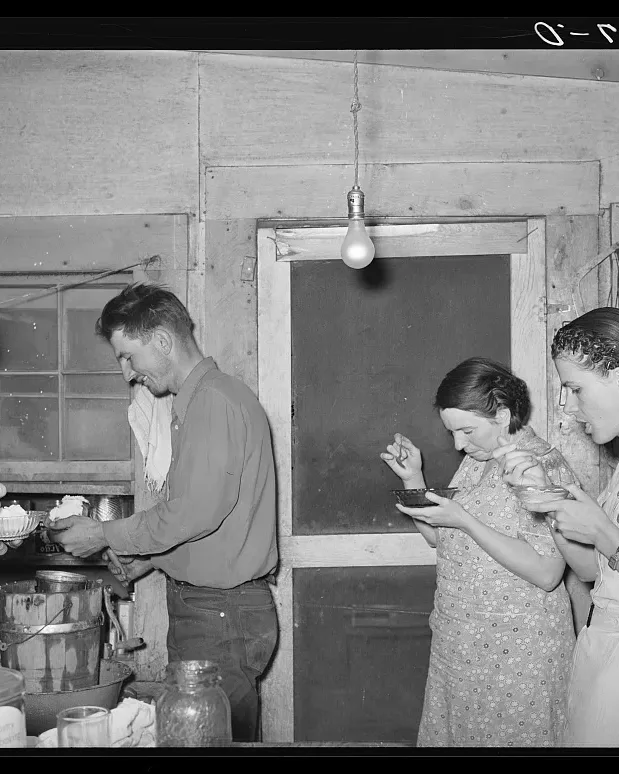
Farmers and their wives eating ice cream. Pie Town, New…
1940
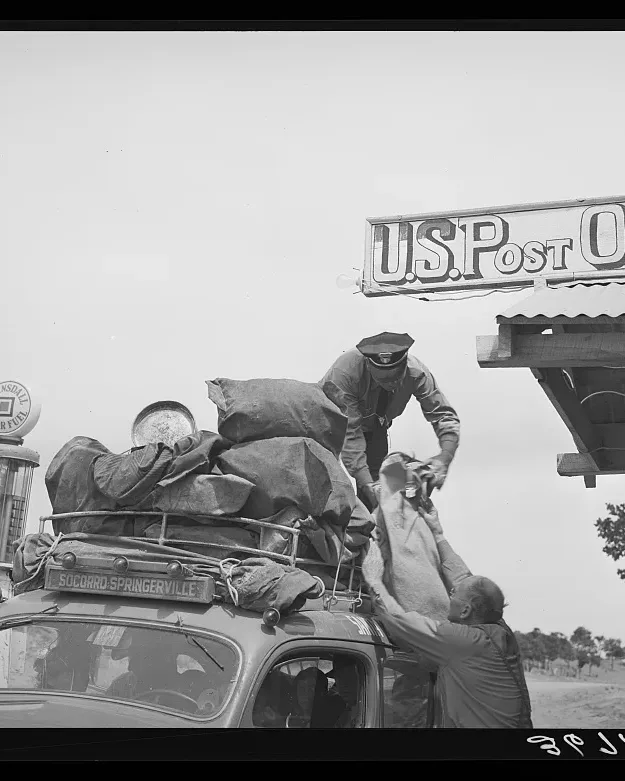
Postmaster at Pie Town, New Mexico, taking a mail sack from…
1940
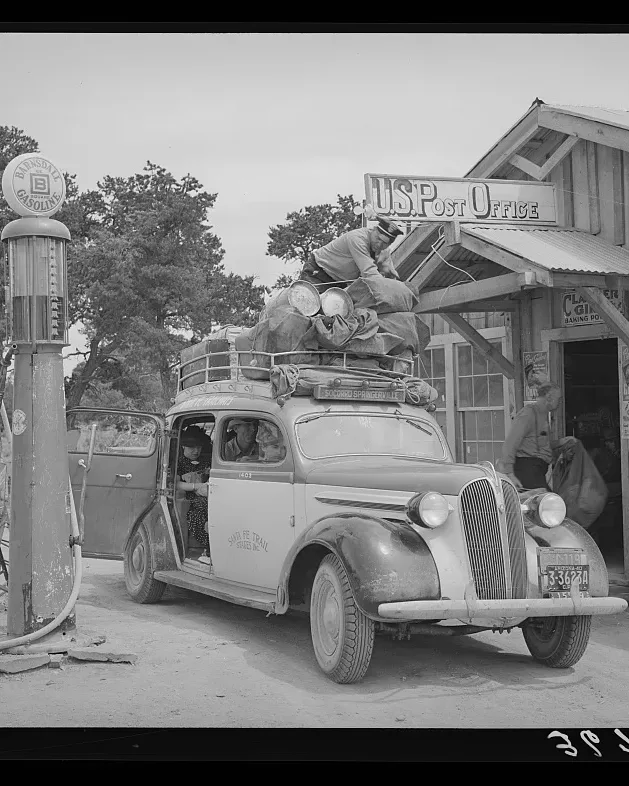
Stage in front of the post office at Pie Town, New Mexico.…
1940
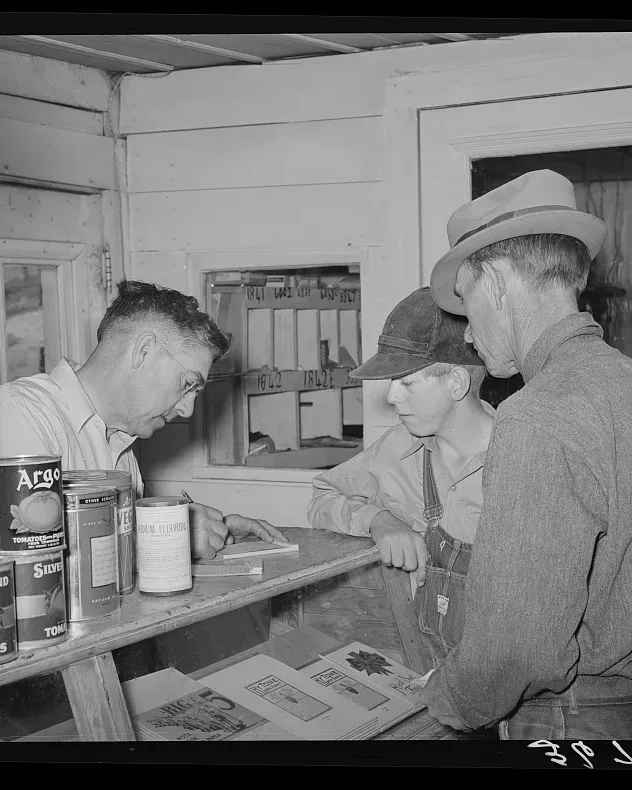
Mr. Keele, merchant and president of the Farm Bureau,…
1940
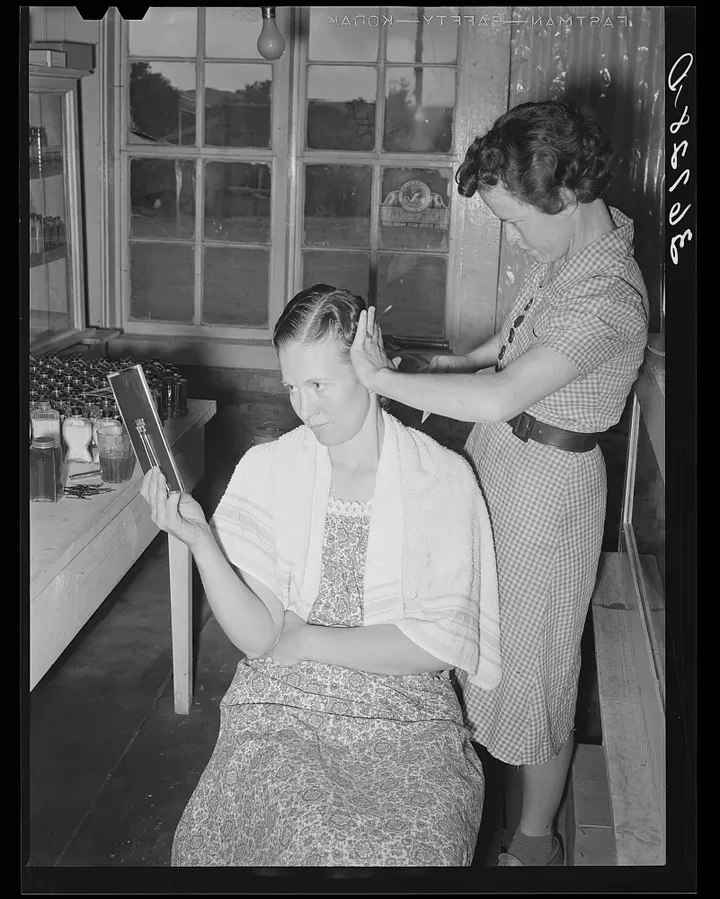
Women fix each other's hair in the absence of a beauty shop…
1940
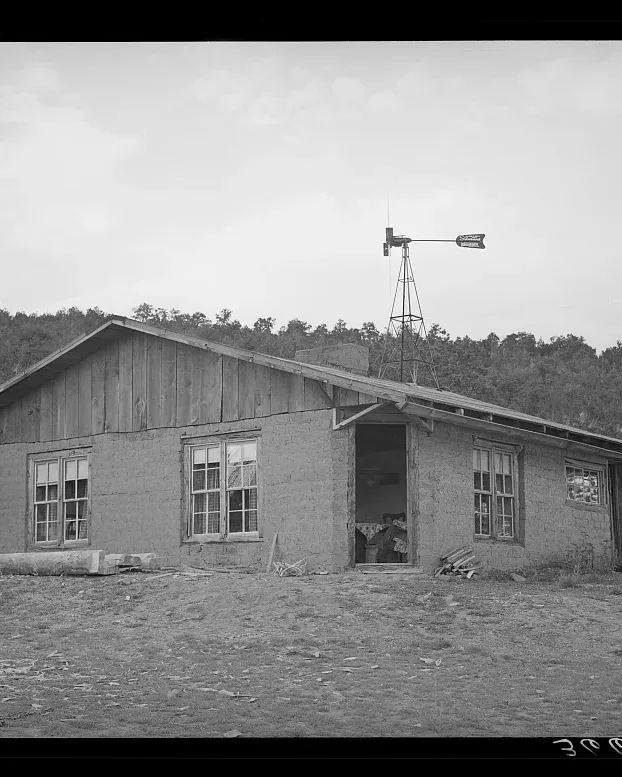
New adobe house of homesteader at Pie Town, New Mexico.…
1940
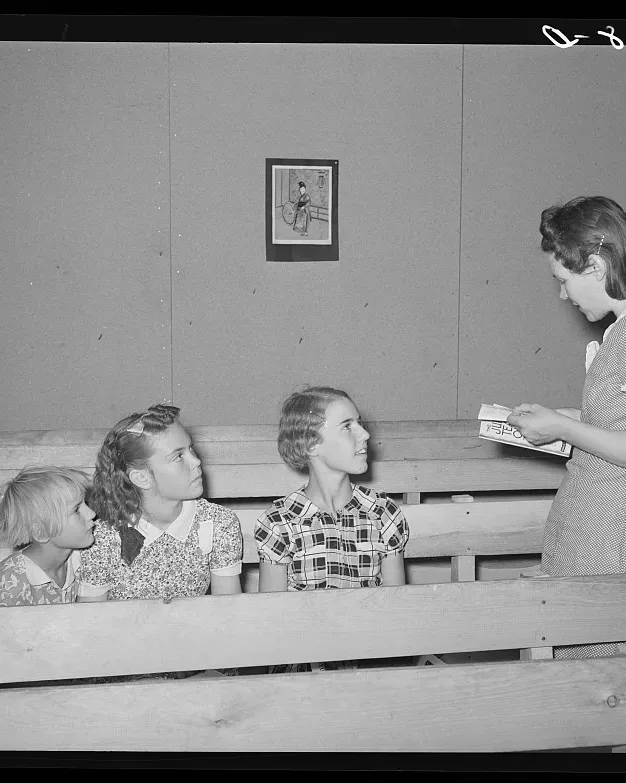
Sunday school in the Farm Bureau building. Pie Town, New…
1940
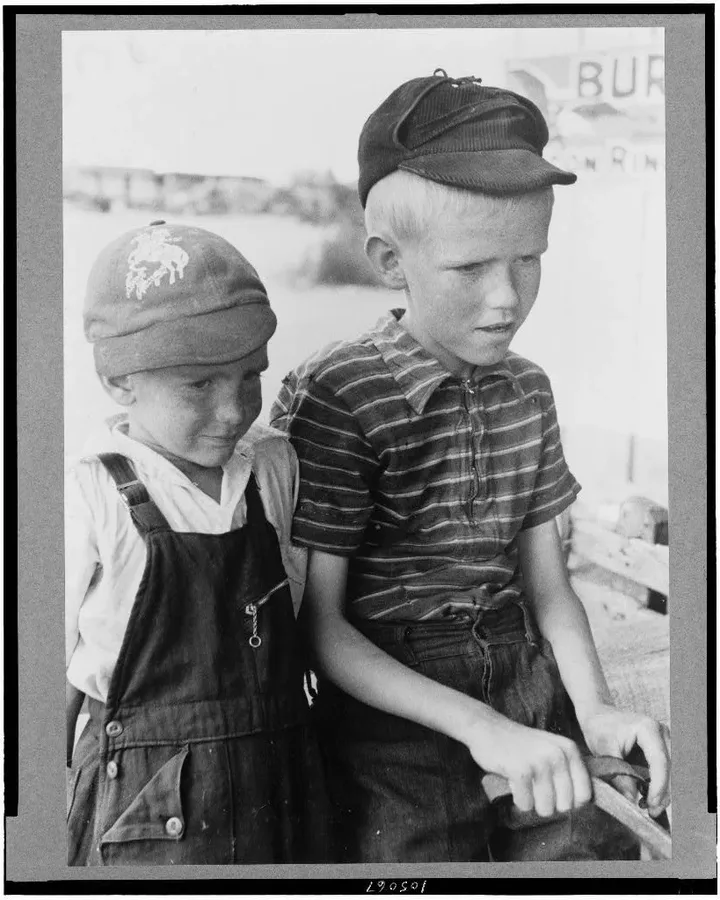
Sons of Mr. Leatherman in burro-drawn cart, Pie Town, New…
1940
Frequently asked questions
When did Russell Lee photograph Pie Town?
In 1940. The Library of Congress dates his black-and-white Pie Town negatives to June 1940 and his color slides of the Pie Town Fair to October 1940.
Who were Faro and Doris Caudill?
Homesteaders in Pie Town who lived in a dugout with their daughter Josie. Lee photographed the family more than any other in the town, and Joan Myers later wrote about Doris in the book Pie Town Woman.
Are Russell Lee's Pie Town photographs in color?
Some are. Most are black-and-white, but Lee also shot Kodachrome slides at Pie Town, mainly at the fall fair. Those color slides are in the Library of Congress FSA/OWI color collection; this archive holds the black-and-white negatives.
How many photographs did Russell Lee take in Pie Town?
Joan Myers puts the number at more than 600 photographs held by the Library of Congress. This archive holds 88 of the black-and-white images.
Can I use the Pie Town photographs?
Lee made them for the Farm Security Administration, a federal agency, and the Library of Congress rights advisory for these FSA/OWI photographs reads: No known restrictions.
Sources
- Dugout home of Faro and Doris Caudill. Pie Town, New Mexico (Library of Congress)
- The Faro Caudill [family] eating dinner in their dugout, Pie Town, New Mexico, color slide (Library of Congress)
- Pie Town Woman, book page (Joan Myers)
- Jack Whinery, homesteader, with family, Pie Town, New Mexico (Nelson-Atkins Museum of Art)
- Russell Lee's FSA photography in New Mexico (New Mexico Museum of Art)
- Lee, Russell Werner (Handbook of Texas, Texas State Historical Association)