Chicago's South Side (1941 photographs) (April 1941)
In April 1941 Russell Lee and fellow FSA photographer Edwin Rosskam photographed Chicago's South Side, the Black neighborhood now known as Bronzeville. Lee's pictures of Easter morning, storefront churches, crowded kitchenette apartments, nightlife and work are one of the few large photographic records of Black Chicago in that period. This page is about the series; the lead image is his Easter-morning street scene.
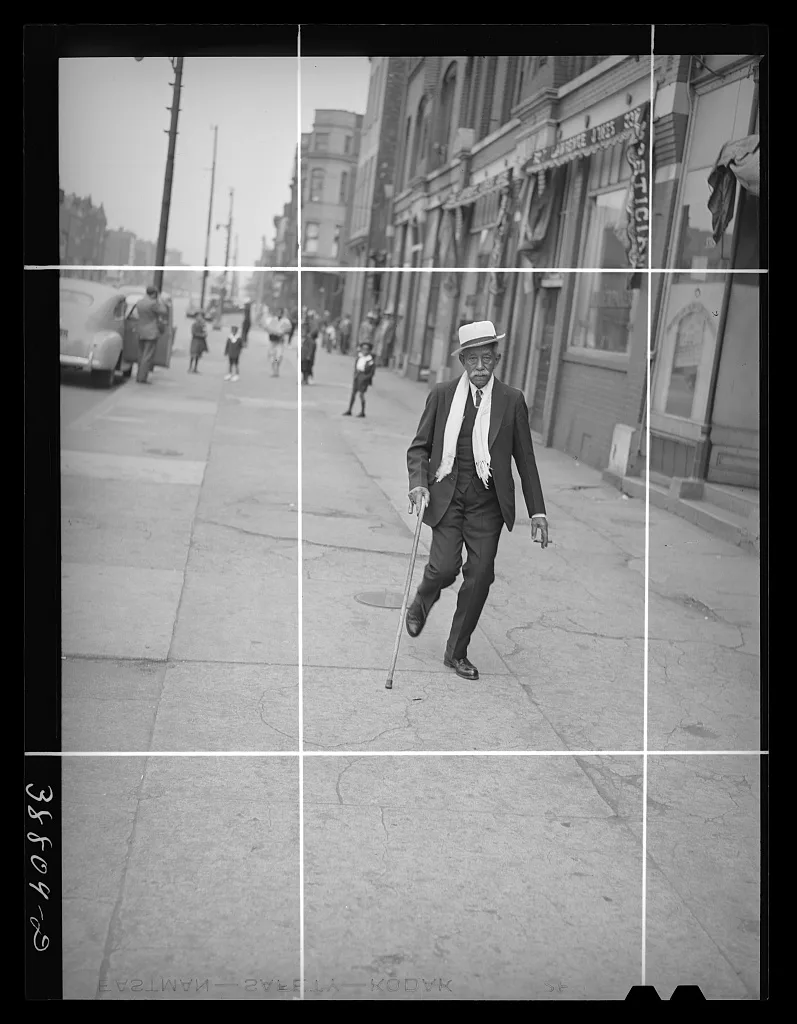
Image: Library of Congress, Prints & Photographs Division, FSA/OWI Collection.
- Photographer
- Russell Lee (1903–1986), Farm Security Administration, working alongside Edwin Rosskam
- Date
- April 1941 (Easter Sunday fell in the same month)
- Place
- South Side of Chicago, Illinois, the area known as Bronzeville or, in the government's term, the Black Belt
- Lead image
- Street scene in the Negro district on Easter morning. Chicago, Illinois (LC-USF34-038809-D)
- Related publication
- 12 Million Black Voices, text by Richard Wright, photographs selected by Edwin Rosskam (Viking Press, October 1941)
- Collection
- Library of Congress, Farm Security Administration/Office of War Information collection (public domain)
- Also known as
- Russell Lee Chicago 1941; Bronzeville 1941 photographs; South Side Chicago Easter 1941; Black Chicago FSA photographs
How the series was made
In April 1941 Russell Lee and Edwin Rosskam went to Chicago to photograph the South Side. Accounts of the trip describe the two photographers spending about three weeks there with help from the novelist Richard Wright, who had come to Chicago from the South in 1927 and knew the neighborhood and many of its people. The Library of Congress catalog dates the Chicago negatives credited to Lee to April 1941.
The assignment fed directly into a book. Viking Press had asked Wright to write a text to accompany FSA photographs of Black Americans, and the result, 12 Million Black Voices: A Folk History of the Negro in the United States, appeared in October 1941 with Wright's prose and photographs selected and edited by Rosskam. The book drew on the whole FSA file, including work by other photographers; Lee's April pictures form a much larger body than the book could use.
Who and what the photographs show
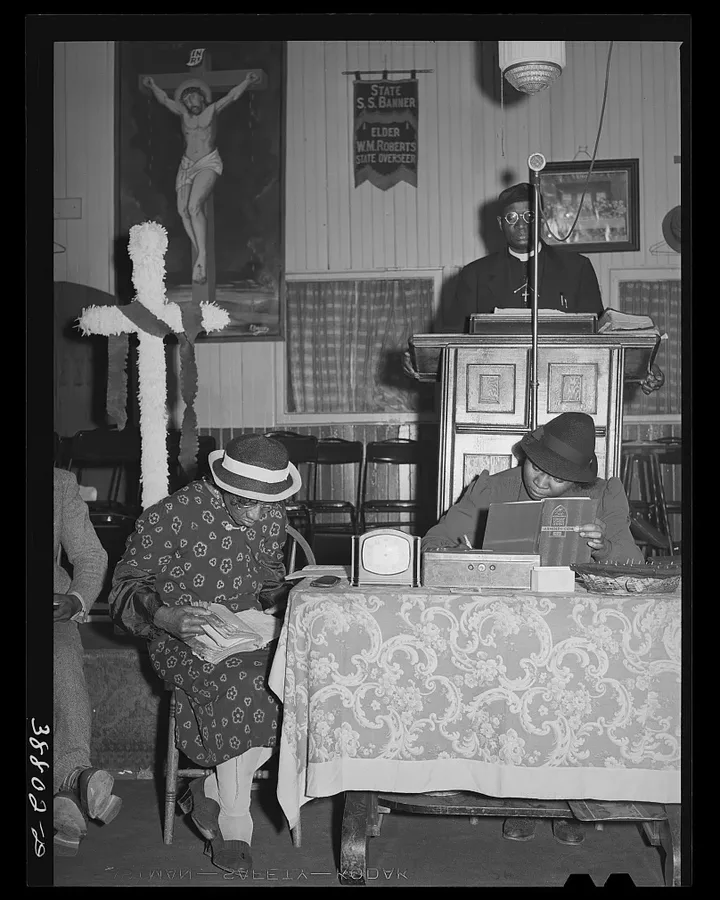
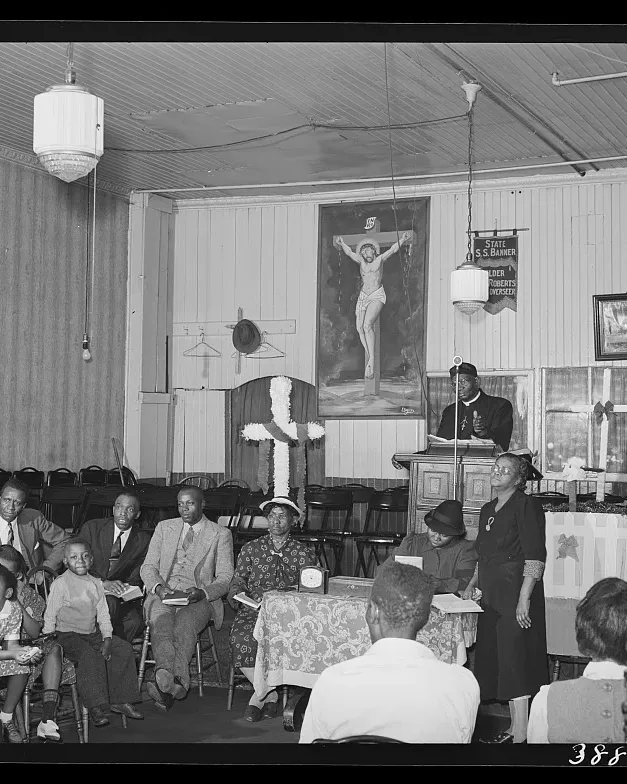
The pictures cover nearly every part of neighborhood life. On Easter Sunday Lee photographed people dressed for church in the street and worshippers inside a storefront Baptist church, one of the small congregations that met in former shops. He returned to a Pentecostal church to photograph its pastor, its choirs, members testifying, and the crutches and canes left behind by people who said they had been healed.
Housing is a second theme. Captions record kitchenette apartments on South Parkway, the boulevard later renamed for Martin Luther King Jr., old brownstones subdivided for new tenants, rooming houses, and families on relief, with a doctor visiting one of their homes. A third theme is the neighborhood's institutions and pleasures: the publisher and editor of the Chicago Defender, an undertaker, a bookkeeper at an insurance company, a shoe store on 47th Street, the main commercial street of Bronzeville, a community center with boxing and art classes, and the crowd and band at the Savoy Ballroom.
Why the series matters
The South Side photographs were made a generation into the Great Migration, which had brought large numbers of Black Southerners to Chicago in search of industrial jobs, and at a time when discrimination largely limited Black families to a district on the city's South Side known as the Black Belt. They show that district not only as a place of crowding and poverty, which the FSA wanted to document, but also as a city within a city, with its own churches, newspapers, businesses and nightlife.
For decades most of these pictures sat in the government files. In 2003 the International Center of Photography in New York mounted the exhibition Bronzeville: Black Chicago in Pictures, 1941–1943, and the New Press published a companion book edited by Maren Stange. The publisher described the FSA coverage by Lee, Rosskam and others as the only significant collection of photographs of Black Chicago in that period, and noted that much of it had gone unpublished until then.
What to look for
Lee was known for using direct flash indoors, where many photographers of his era did not try to work, and the Chicago series shows why that mattered. The flash pictures of church services, kitchens and crowded bedrooms record faces, furniture, laundry hung near the ceiling and the condition of walls and plumbing in a way that available light could not have done in 1941.
Outdoors, the Easter pictures reward attention to clothing and posture: hats, coats and children's outfits worn for the holiday, and people greeting each other after services. Compare the street scenes with the interiors of the relief households, and the contrast that the series was built around becomes clear.
A note on the captions and on this archive's holdings
The original FSA caption cards, which the Library of Congress keeps as titles, use the period term Negro, as in Street scene in the Negro district on Easter morning. This archive reproduces those titles so that each record can be matched to the Library of Congress, but the term is outdated; the people in these photographs would today be described as Black or African American Chicagoans.
This archive holds more than 200 of Lee's 1941 Chicago photographs, most of them from the South Side, all black-and-white negatives credited to him in the Library of Congress catalog. The lead image is Street scene in the Negro district on Easter morning (negative LC-USF34-038809-D). Related images on this page include the storefront Baptist church on Easter Sunday, the Pentecostal church services, the kitchenette apartments on South Parkway, 47th Street, the Chicago Defender office, the Savoy Ballroom and the Good Shepherd Community Center. Photographs made by Edwin Rosskam on the same trip are catalogued under his name and are not part of this archive.
Other versions in the archive
During the services at "storefront" Baptist church on…
1941
"Storefront" Baptist church during services on Easter…
1941
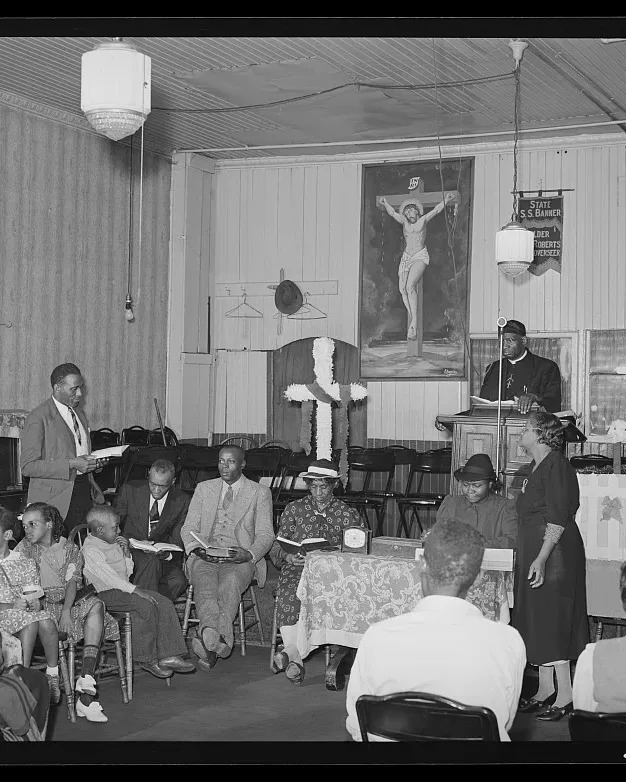
During the services of the "storefront" Baptist church.…
1941
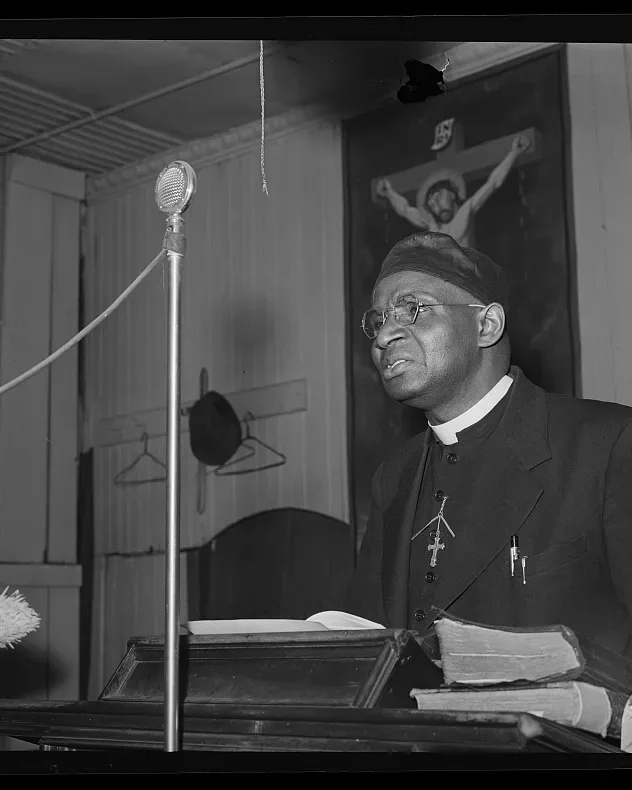
Preacher at "store front" Baptist church. Chicago, Illinois
1941
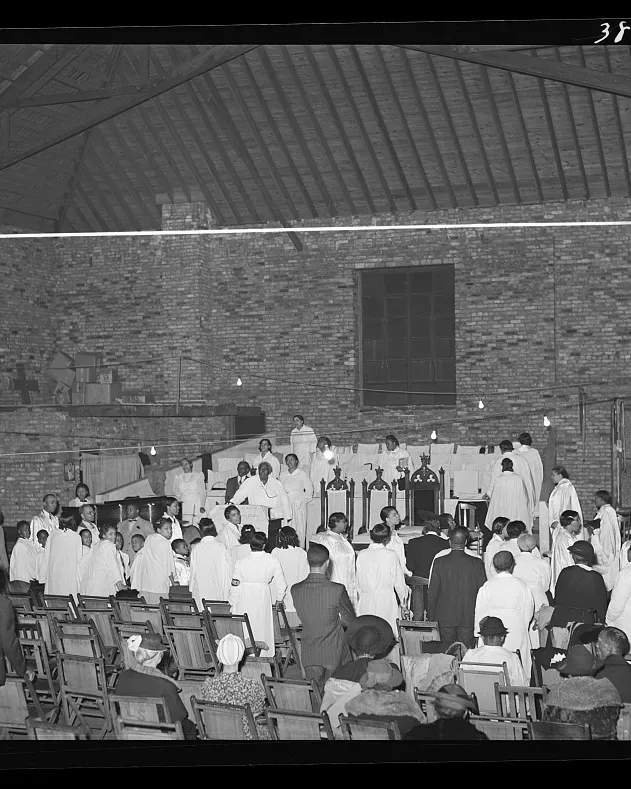
Opening of services at the Pentecostal church. Chicago,…
1941
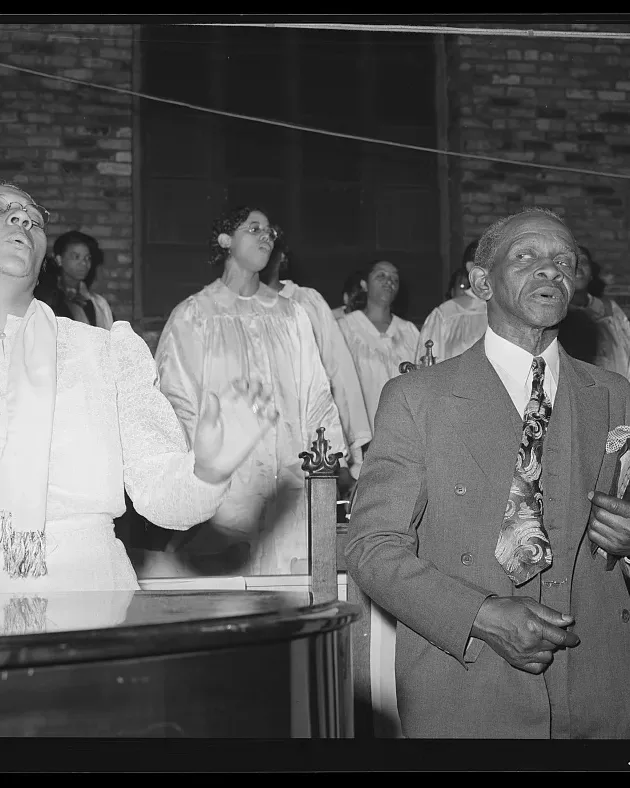
Singing at a Pentecostal church. Chicago, Illinois
1941
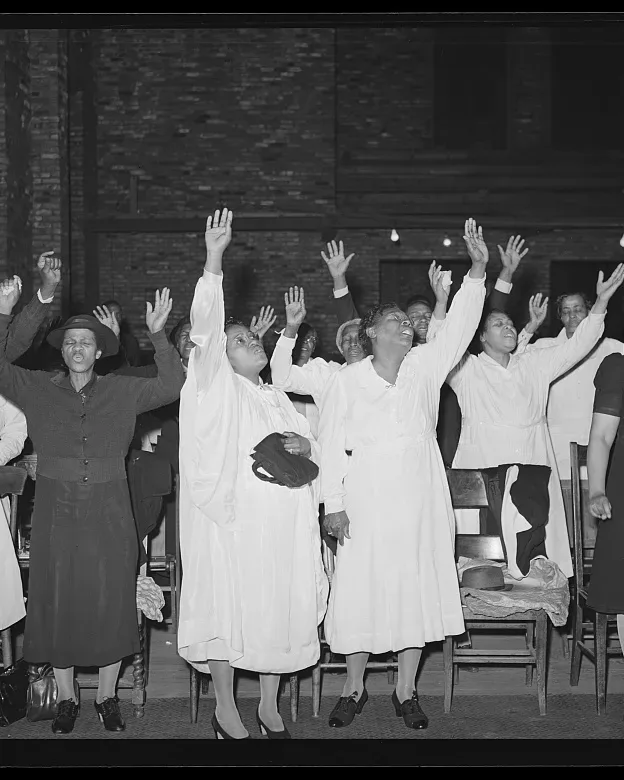
Members of the Pentecostal church praising the Lord.…
1941
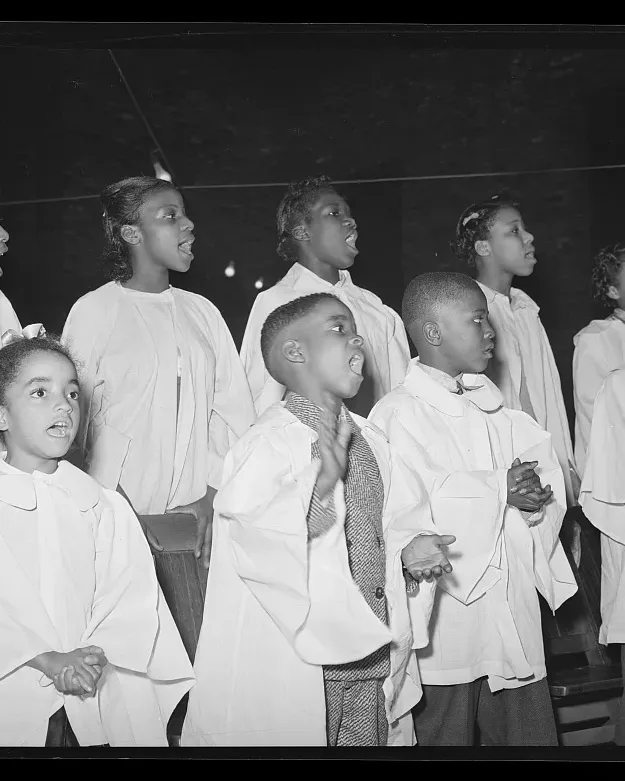
Children's choir of Pentecostal church. Chicago, Illinois
1941
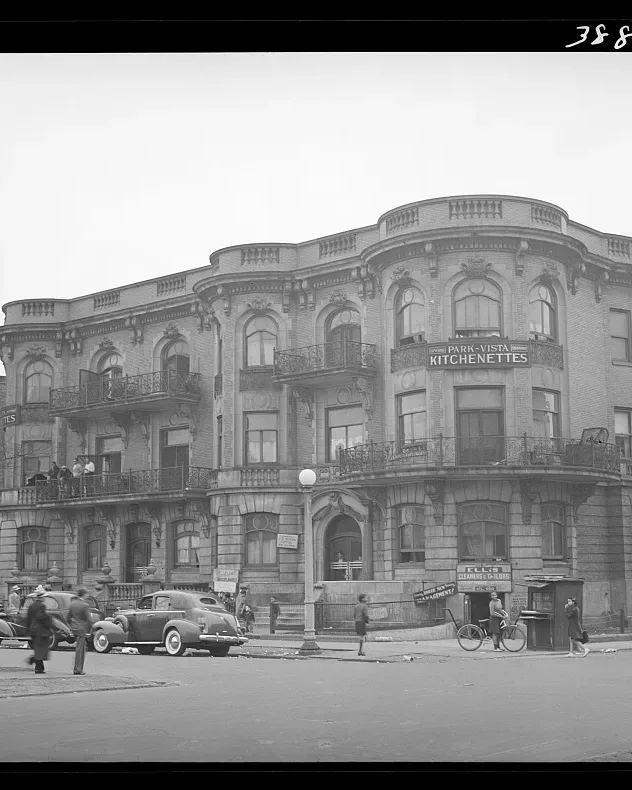
Kitchenette apartments on South Parkway, Chicago, Illinois.…
1941
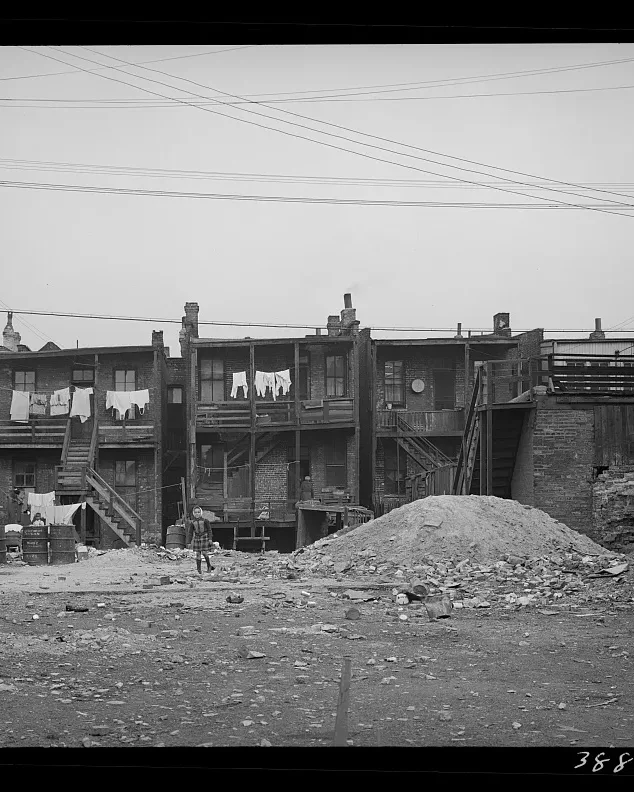
Apartment buildings rented to Negroes. Chicago, Illinois
1941
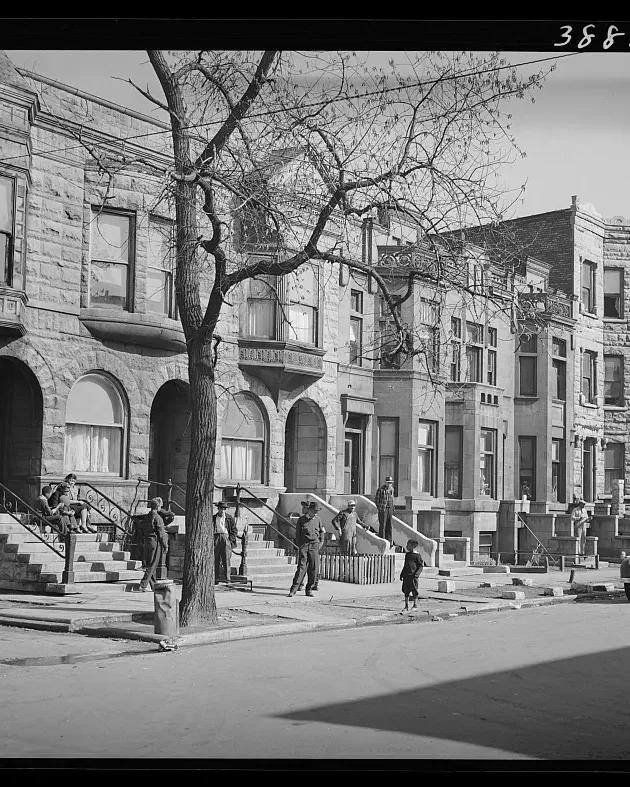
Old brownstone houses now occupied by Negroes in Chicago,…
1941
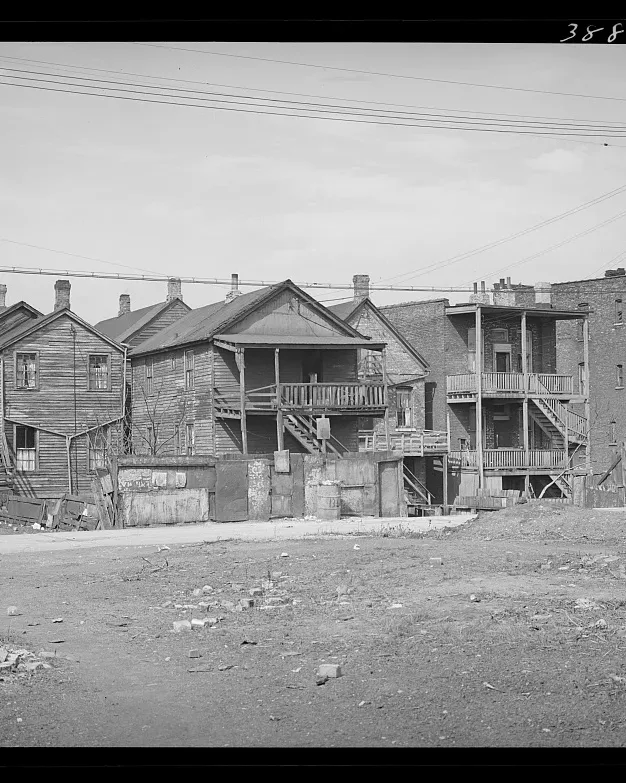
Dwellings in Negro section of Chicago, Illinois
1941
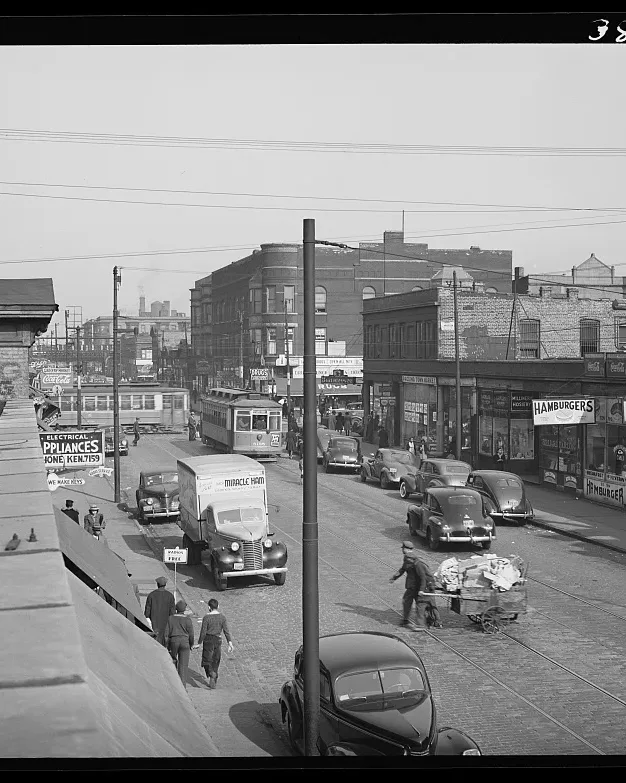
47th Street, Chicago, Illinois
1941
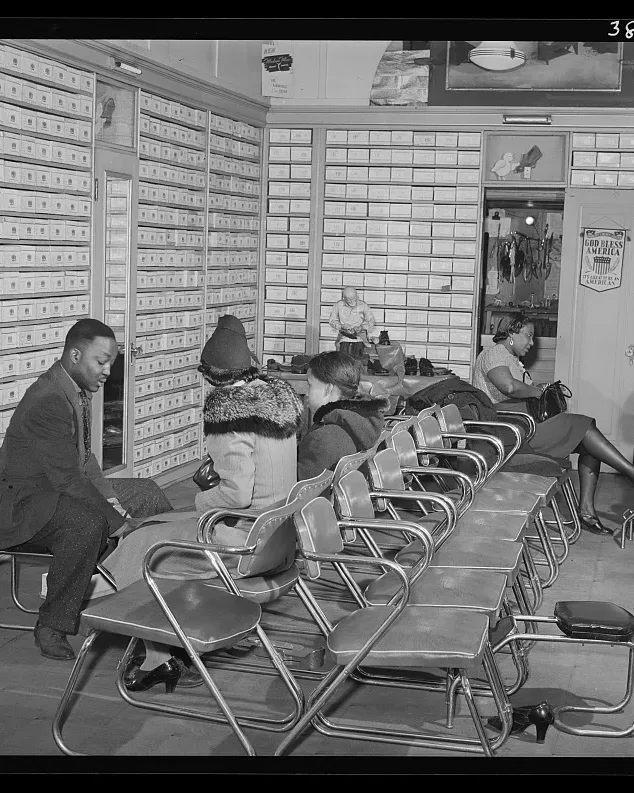
Shoestore on 47th Street. Chicago, Illinois
1941
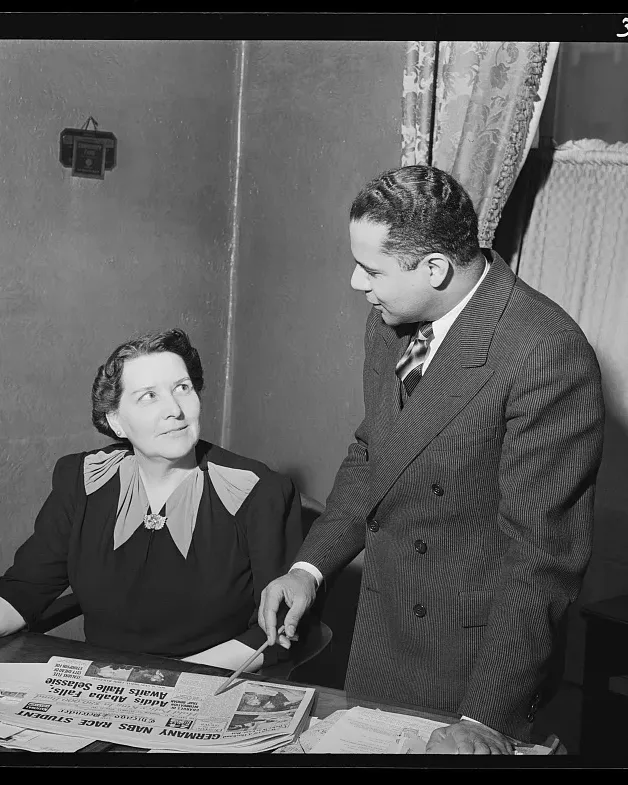
Publisher and editor of Chicago Defender, Negro newspaper.…
1941
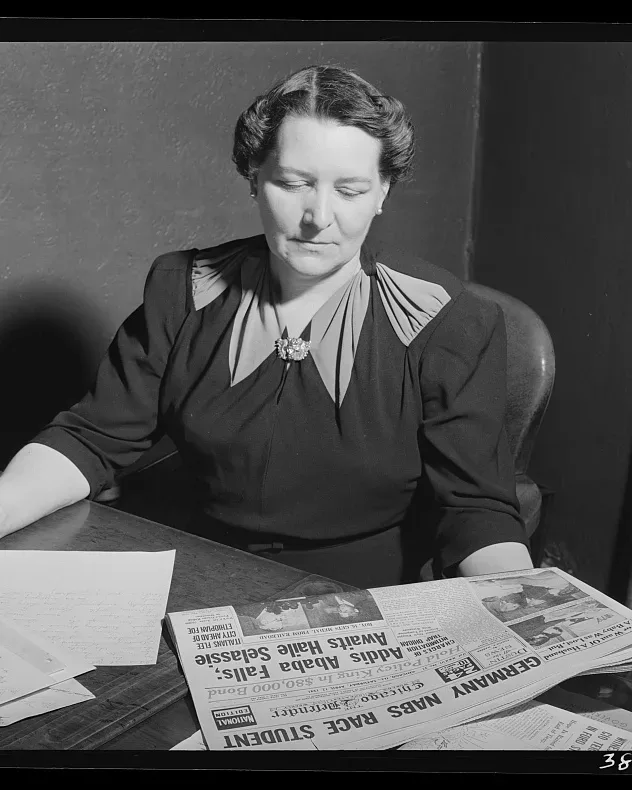
Publisher of the Chicago Defender, Negro newspaper.…
1941
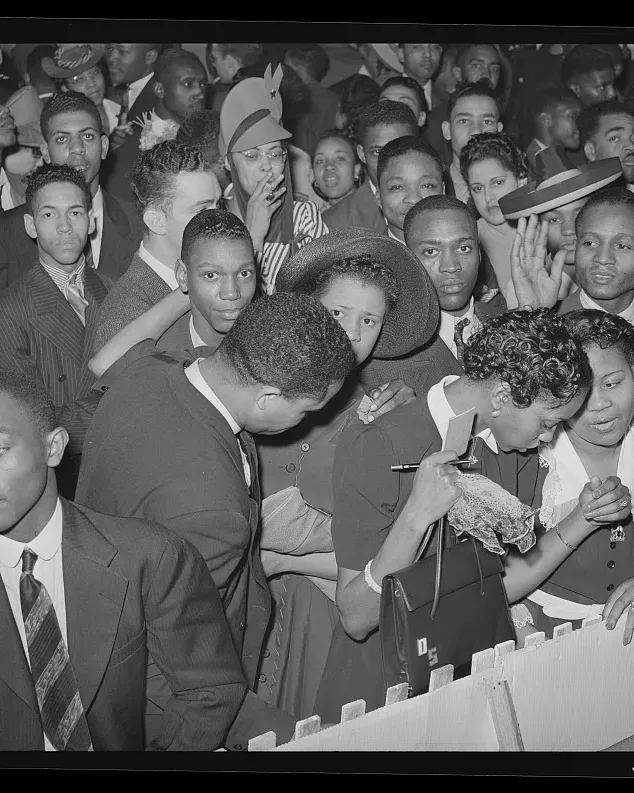
Detail of crowd watching the orchestra at the Savoy…
1941
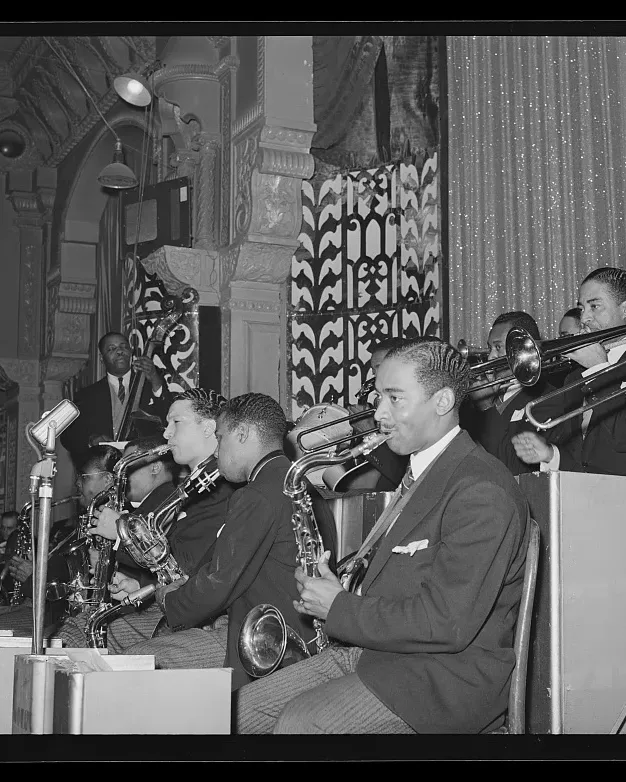
The band at the Savoy Ballroom. Chicago, Illinois
1941
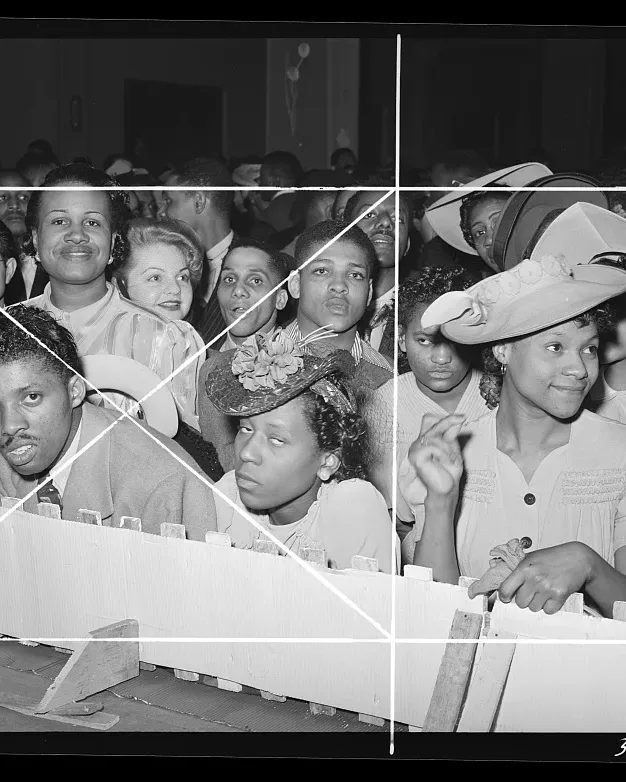
Girl listening to music at dance. Chicago, Illinois
1941
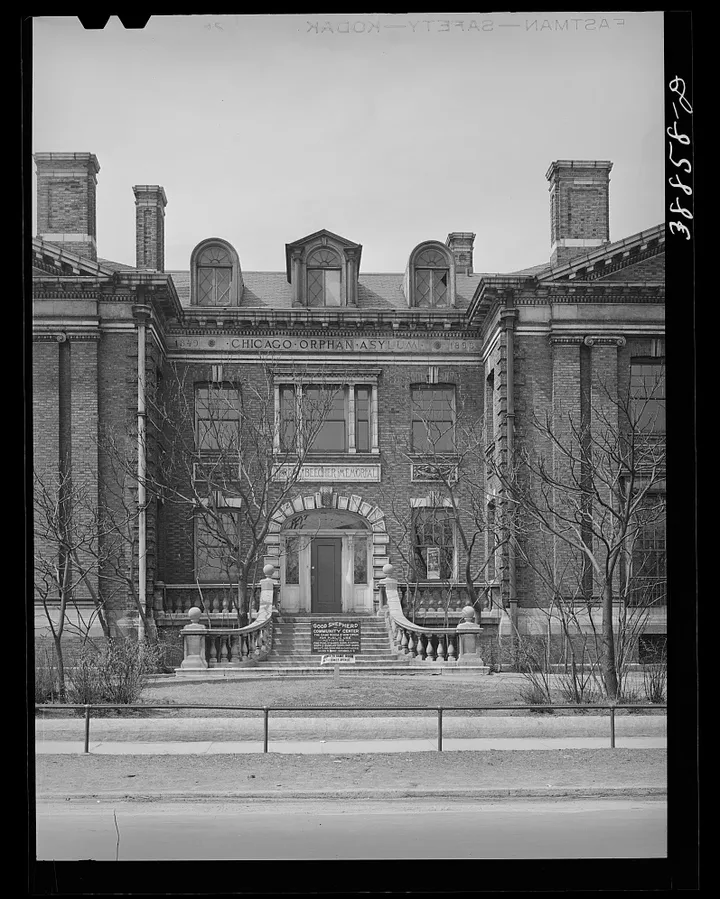
Good Shepherd Community Center. Chicago, Illinois
1941
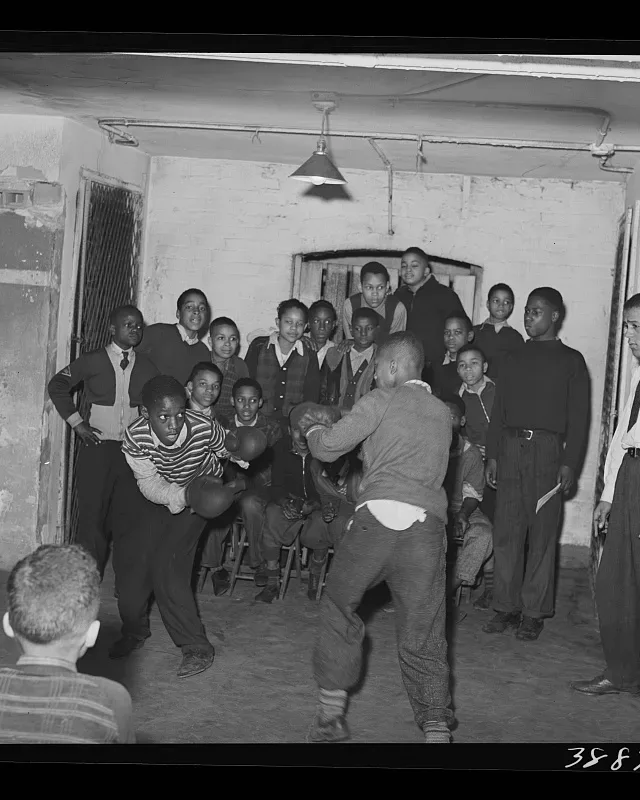
Boxing is popular at the Good Shepherd Community Center.…
1941
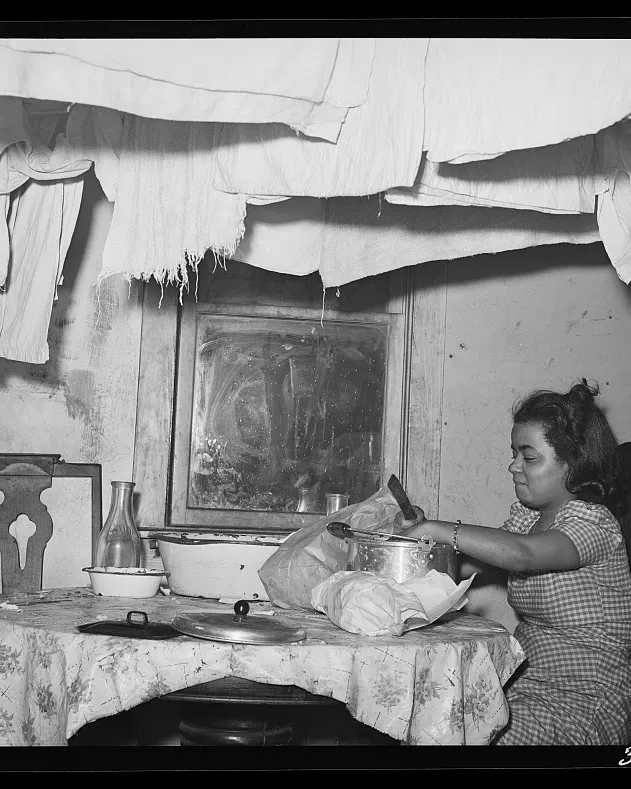
Preparing the evening meal. Notice the laundry hanging near…
1941
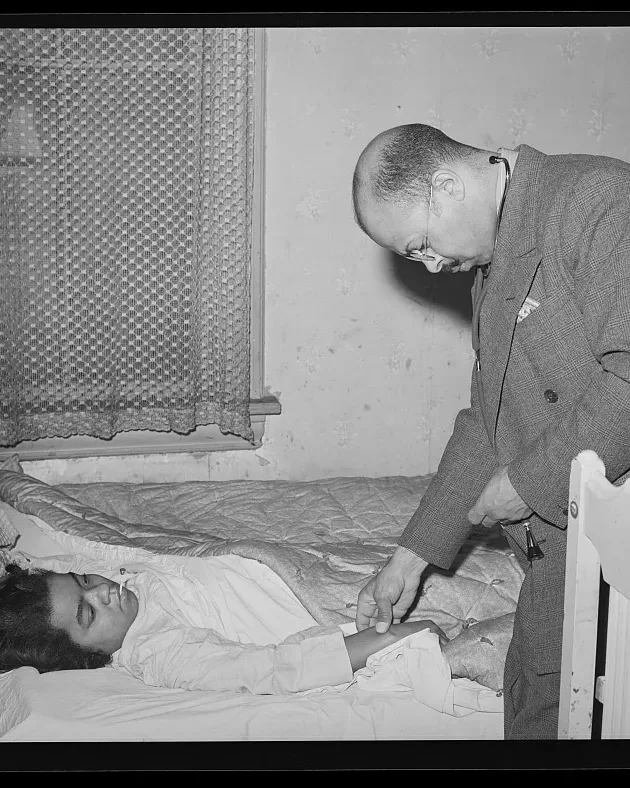
Doctor examining patient in her home. Family is on relief.…
1941
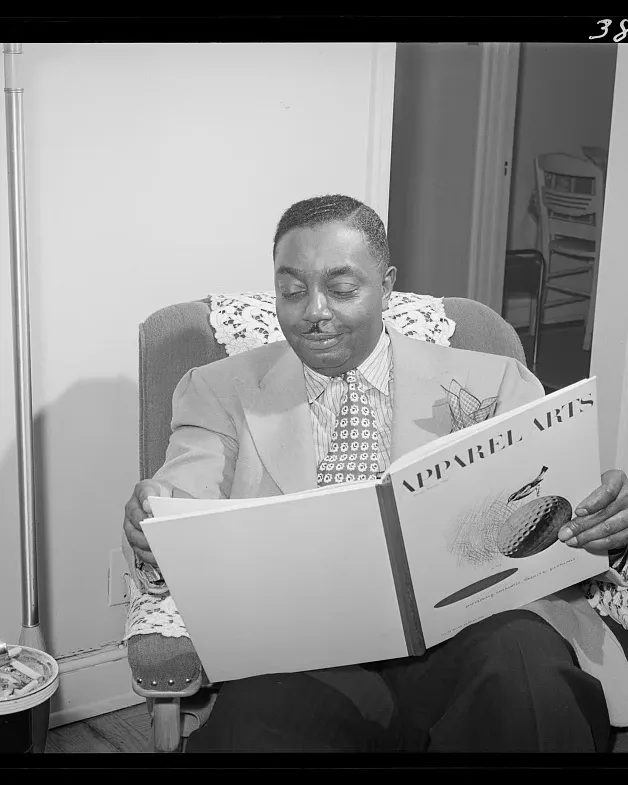
The best dressed Negro in Chicago, Illinois, spends an…
1941
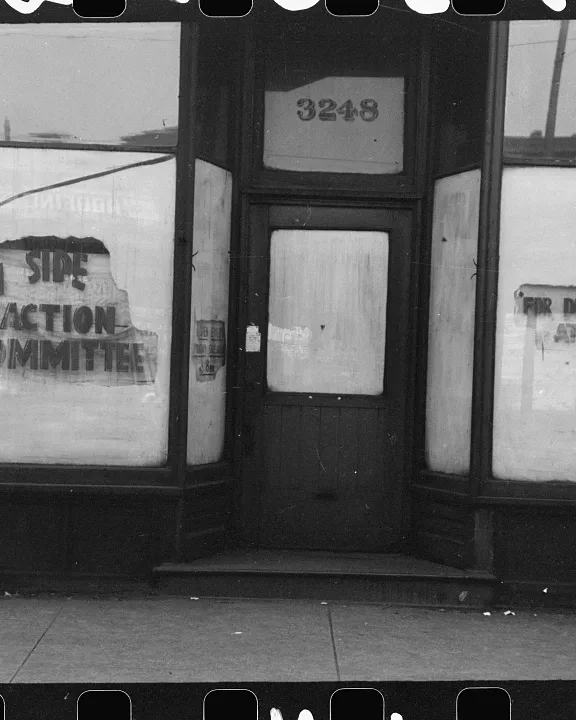
Sign in Negro section of Chicago, Illinois
1941
Frequently asked questions
When did Russell Lee photograph Chicago's South Side?
In April 1941, working for the Farm Security Administration alongside Edwin Rosskam. The Library of Congress dates Lee's Chicago negatives to that month.
Are Russell Lee's photographs in 12 Million Black Voices?
12 Million Black Voices (1941) combined Richard Wright's text with FSA photographs selected by Edwin Rosskam from the agency's files, which included work by several photographers. The April 1941 Chicago trip by Lee and Rosskam was part of the background to the book, but Lee's Chicago series is far larger than the book's selection.
What is Bronzeville?
The historic Black neighborhood on Chicago's South Side, centered on 47th Street. In the early twentieth century it was known as the Black Metropolis; the name Bronzeville was first used in 1930 by James J. Gentry, a theater editor for the Chicago Bee.
Why do the photo titles use the word Negro?
The titles are the original 1941 FSA captions, which the Library of Congress keeps unchanged as historical records. The term is outdated, and this archive keeps it only so each photograph can be matched to its Library of Congress record.
Sources
- Street scene in the Negro district on Easter morning. Chicago, Illinois (Library of Congress)
- 12 Million Black Voices (Wikipedia)
- Bronzeville: Black Chicago in Pictures, 1941-1943, book description (University of Pennsylvania)
- Bronzeville: Black Chicago in Pictures, 1941-1943, exhibition (International Center of Photography)
- Chicago's South Side April 1941: Life in 'The Black Belt' (Flashbak)
- Bronzeville, Chicago (Wikipedia)